Home Blog Page 27

Pender firefighters’ social media messages get noticed

0

Social media darlings Pender Island Fire Rescue (PIFR) enjoyed a Christmas Eve interview with Chicago-based Nexstar Media Group affiliate WGNTV, highlighting the department’s success at promoting fire safety messages online.

Capt. Todd Bulled, who spearheaded the rural fire department’s now-viral awareness efforts, appeared via remote on U.S. television with Assistant Chief Adrian Hanson and Capt. Jon Grelik, thanking his “Gen Z secret weapon” son, the humour instincts of comedy-straight-man Fire Chief Mike Dine and award-winning actor and Pender Island resident Bruce Greenwood — who Bulled said helped refine their videos and even made a cameo appearance.

Bulled was also interviewed earlier this month for CBC Radio’s The Current. 

With a peak of 1.3 million likes for their Nov. 12 smoke-detector-themed parody of the Twilight movie franchise, the PIFR’s Instagram profile @penderfire now has more than 73,400 followers — or nearly 14 times more than the Capital Regional District (@crd_bc), which contracts with the Pender Islands Fire Protection Society to provide service to North and South Pender islands.

Viewpoint: The Dismantling of the Islands Trust

0

By RONALD WRIGHT

Fifty years ago, B.C. took a bold step to save our islands from “exploitation by real-estate developers and speculators,” passing the Islands Trust Act, with its famous mandate “to preserve and protect” the Trust Area. Most islanders know this is what keeps our natural beauty and rural character largely unspoiled. Yet few know that our legal protections are now being dismantled by trustees sworn to uphold them.

The immediate threat is a revised Trust Policy Statement (TPS), which could become law within months. Our TPS sets the bar that official community plans (OCPs) and major bylaws must meet. The existing one has stood for decades. So might this new one — but only if the B.C. government approves it.

We’re being told that consultation with public and First Nations was done during “Phase 1” in 2019, and now it’s time to finish the job. There was indeed broad outreach back then. More than 1,600 people gave input at open houses, information booths, on ferries and online. The public’s top priorities were 1) connection to nature, and 2) strengthening the Trust’s protections. A new TPS based on that input was ready for first reading in July 2021. But just days before Trust Council met to debate it, Salt Spring trustees Laura Patrick and Peter Grove derailed the whole process.

Fast forward to today, when we face a vastly different draft TPS that ignores what most islanders asked for in 2019 (with little outreach since). This new TPS favours development over ecological protection, camouflaged by greenwash and lip-service to Indigenous concerns. Environmental impacts of development need only be “considered.” It promotes urban density schemes that would allow many units on lots currently zoned for one. Trustees are directed to preserve “ecosystem integrity” in a patchwork of areas, not the Trust islands as a whole. The top housing directive is for “attainable” housing, a term undefined and unregulated.

A vocal minority — mainly speculators, logging firms, and developers — have long opposed the Trust. In 1982 it was nearly abolished. Then came referendums on municipal incorporation, none of which passed except the first (Bowen, 1999). After the latest failed decisively in 2017, foes of the Trust sought office, running on property rights and housing platforms. Recent events reveal that such trustees now have the upper hand.

The core Trust Act mandate is “to preserve and protect the Trust Area and its unique amenities and environment.” In September 2023 a secret number of trustees met behind closed doors to find a way around it. Council then announced that “unique amenities are broad-ranging and may include issues such as, but not limited to, housing, livelihoods, infrastructure and tourism.”

The proposed TPS relies on this blatant misreading, as do simultaneous reviews of Salt Spring’s OCP and six others. Rewriting OCPs while the TPS is itself being rewritten is an abuse of process and an irresponsible handling of public funds. Hence trustees’ haste to push it all through before this fall’s elections.

Anyone with concerns will have a last chance to be heard at Harbour House on Tuesday, Jan. 13 at 6:30 p.m. Please come to this — and write to the minister who has the final say: HMA.Minister@gov.bc.ca.

The writer is a longtime Salt Springer and author of 10 books, including A Short History of Progress, his CBC Massey Lectures.

Peter Pan set to fly with GISS

Gulf Islands Secondary School (GISS) 2nd Story Theatre students are in full production-prep mode after returning to school after the holiday break.

Peter Pan is the term-end show running at ArtSpring next Wednesday, Thursday and Friday, Jan. 14, 15 and 16 at 7:30 p.m. each night. The show has been entirely designed and produced by the students, and is described in promotional material as “a dynamic, imaginative show you won’t want to miss. This marks only the second time Grade 9 students have appeared in a 2nd Story production, and the entire ensemble has been working tirelessly to bring this magical world to life for you.”

The original Peter Pan play was written by Scottish playwright J.M. Barrie in 1904 and has been produced in numerous forms since, including the 1953 animated Disney film.

“Travel with Peter Pan as he whisks Wendy, John and Michael away to Neverland — a place where childhood lasts forever, and every day is an adventure,” states the GISS show summary. “Pirates lurk, mischief brews and excitement fills the air. But when the infamous Captain Hook begins stirring up trouble, the stakes rise. Can the Lost Boys hold on to their sense of family? Or will Hook finally have his revenge on Peter?”

The production runs two hours and has an intermission with a concession.

Tickets cost $15 and are available through ArtSpring, online and at the box office.

Looking Back, Looking Forward: A Year of Transition and a Call to Action

0

By LAURA PATRICK

Salt Spring Local Trustee &

Chair, Islands Trust Council

The past year marked a significant transition for the Islands Trust. In March, following trustee Peter Luckham’s decision to step down as Trust Council chair, fellow trustees elected me to take on that role. It was both an honour and great responsibility for me, coming at a time when the organization faced growing challenges.

After the provincial government declined — twice — to undertake a review of the Islands Trust, and with the hiring of a new capable and experienced chief administrative officer in Rueben Bronee (the Trust’s first change in staff leadership in nine years), the mandate to address our challenges was clear. Public confidence had to be regained, staff were ready for new direction and the Trust took seriously its obligation to fulfill its mandate.

No one understands the pressing needs better than the trustees who stepped up for the job of representing their communities. We are not professional politicians. We all want an organization that our staff are proud to work for, and we want our efforts to make a meaningful difference for the well-being of our island communities and the environment we are entrusted to preserve and protect.

At the federation of island communities level, Trust Council took an important step forward in July by giving first reading to the draft Trust Policy Statement. This legislated document sets out the overarching policies that guide how the Trust carries out its mandate. Local Trust Committee bylaws must align with it.

The process to update the Policy Statement began in 2019. The current version dates back to 1993 and is no longer fit for purpose in the face of climate change, housing pressures, reconciliation with First Nations and growing social inequity. The draft is now open for comment, and a second community information meeting will be held on Tuesday, Jan. 13 at 6 p.m. at the Harbour House Hotel.

Looking back on the past year, another milestone was the completion of a comprehensive operational review report delivered by our CAO after his first year in the role. The amount of work behind this report is significant, and its recommendations begin to address longstanding operational issues. For those interested, the report is available on the Islands Trust website.

Here on Salt Spring Island, we continue to move forward with updating our official community plan (OCP) and land use bylaws. With the new office now open, staff and consultants can focus on a second round of public engagement beginning in February.

The need for this work could not be clearer. Policies embedded in our current OCP have failed to meaningfully address the housing crisis. More and more workers are being pushed into unsafe, non-conforming or makeshift housing.

The current OCP treats affordable housing as an exception to density limits rather than a central planning priority. It continues to leave substantial growth capacity within the density limits to satisfy ongoing demand for second and retirement homes.

Maintaining the status quo will all but guarantee worsening outcomes: deeper inequality, greater ecological degradation, reduced service availability, and increasing social and economic instability.

As we look forward, everyone is invited to help shape an updated framework — one that is more resilient, more equitable and more respectful of Indigenous rights and title, and ecological limits.

There were also important bright spots this past year. I am deeply grateful for the completion of two housing projects: the Lady Minto Hospital Foundation’s Heartwood House and the province’s supported housing project on Drake Road.

When a CBC reporter recently asked me how I stay motivated while working on housing challenges that can feel overwhelming, my answer was simple. There are so many people on Salt Spring Island doing hard, thoughtful work to advance real solutions. Supporting those dedicated islanders — and working alongside them — is what keeps me going.

LCC looks to build on work done in 2025

0

By EARL ROOK

Chair, Salt Spring Local Community Commission

As the Salt Spring Island Local Community Commission (LCC) moves into 2026, the final year of its electoral term, we have been active in managing local Capital Regional District (CRD) services where we were delegated full administrative authority, as well as the contribution agreements helping to fund the library, ArtSpring, the Salt Spring Arts Council, and Search and Rescue.

The LCC has also taken on an advocacy role with senior levels of government on issues of importance to the community and has reached out to other local governing bodies to improve communication, coordination and mutual support. In 2025, the LCC and local CRD staff, in particular, worked to advance the priorities laid out in the LCC 2024-2027 strategic plan, which can be seen on the LCC’s page on the CRD website.

Housing remains Salt Spring’s top economic priority. The LCC has taken the lead in developing an integrated housing strategy in collaboration with the Trust, North Salt Spring Waterworks District and other local organizations. The LCC sees the work on the housing strategy as feeding into the Islands Trust review of the official community plan. The LCC has convened a stakeholder workshop on short term vacation rentals (STVR) and their impact on Salt Spring housing, work that continues into 2026. The LCC is also working closely with the new CRD Rural Housing Program, the Southern Gulf Islands Tourism Partnership (SGITP) and the Housing Now landlord-tenant matching program on housing initiatives. It has advocated in support of the Seabreeze Inne redevelopment and the inclusion of Salt Spring in the provincial Speculation and Vacancy Tax and the Short-Term Rental Accommodations Act. The LCC leased space in the former Phoenix School to the Chuan Society to provide a year round support and warming facility for community members, including those who are underhoused.

The LCC is supporting the housing strategy through its Economic Development service, which also funds other initiatives, including the Chamber of Commerce Information Centre, the Farmland Trust’s Neighbourhood Farmer Training Program, the Abattoir Skills Training program and the Tuesday Farmers Market.

The LCC Grant in Aid program provides funding for a broad range of local community initiatives. The LCC has increased the modest budget for these grants which in 2025 supported invasive plant chipping, food resiliency, our community’s non-profit radio station, local performing arts and social services.

Salt Spring Transit continues to face funding challenges as rising costs of operation, particularly BC Transit bus lease rates, well exceed inflation. At the LCC’s request the CRD Board has approved a 25 per cent increase to the maximum levy for this service, which will cover increased operating costs as needed to maintain existing service levels.The LCC is also considering a fare increase for the first time in many years and will soon discuss whether to go to the voters to approve a more significant increase in the maximum levy to fund planned service expansion in 2028. Work continues to co-locate transit bus storage and charging with a new parks and recreation maintenance facility on Kanaka Road, and on expanding the number of bus shelters along island routes.

Transportation under the jurisdiction of the LCC is mostly focused on the development and maintenance of pedestrian and biking trails, as island roads are under the authority of the province. The LCC is proceeding with implementing the Ganges Active Transportation Plan, which includes sidewalk, bicycle lane and crosswalk improvements. It recently completed the Kanaka Connector trail with work continuing on the Merchants Mews trail.

The LCC meets regularly with Ministry of Transportation and Transit (MoTT) managers, discussing concerns ranging from speed limits and road maintenance to reflectors and line painting. It is working with Island Pathways and other stakeholders on the Salish Sea Trail, which has received design funding from the new CRD transportation service for the Vesuvius-Central segment. LCC advocacy included pushback to BC Ferries on proposed homeporting of new ferries on the Vesuvius route at Crofton and with MOTT to prioritize repaving Fulford-Ganges Road from Cranberry to Cusheon Lake Road.

While the Salt Spring Island Multi Space (SIMS) community centre and the Rainbow Road pool facility continue to be heavily used Parks and Recreation facilities, both require major repairs. SIMS needs an HVAC upgrade from propane to heat pumps to reduce the high cost of heating, as well as a new roof. The failure of the pool building envelope requires extensive repairs. While grants are being sought to cover some of these costs, the LCC may need to seek voter approval for borrowing to keep these valuable facilities operational. The LCC will also seek input on the re-purposing of the Ganges fire hall site once an assessment of the building’s condition is completed. Planning continues on the Ganges Harbourwalk. Centennial Park washroom hours were extended to midnight.

The LCC is working to identify the best option for de-watering liquid waste on-island to reduce costly off-island trucking. A 2025 study of the geo-tube option for de-watering disappointingly failed to meet cost/benefit criteria. However, the LCC will continue to monitor changing legal, technical and market conditions that may improve the economics of onsite de-watering in the future.

The LCC and CRD director continue to broaden engagement with other agencies and organizations, including Islands Trust, NSSWD, Salt Spring Fire Rescue, BC Ferries, the SGITP, School District 64 and various community interest groups. The LCC hosted stakeholder roundtables in 2025 on STVRs, harbour management, noise bylaws and housing — all efforts to be continued into 2026.

The proposed requisition increase for 2026 is about 9.5 per cent for local LCC services and 6.6 per cent for regional CRD services. We plan to write about the budget in an upcoming Driftwood.

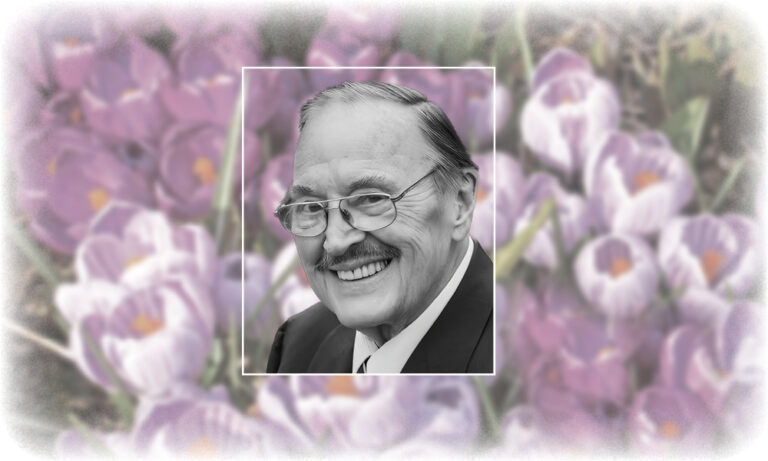
WARREN, James Darcy

James Darcy Warren died on the 29th of December at the Lady Minto Hospital in

Ganges, Saltspring Island.

Jim was born in Selkirk, Manitoba in 1934 to his parents Earle and Nora. Earle worked for the Canadian National Railway and Nora taught school. Jim was the oldest of four brothers (Kenneth, Philip and David) and the family lived in a variety of small communities in Manitoba and Saskatchewan. He played hockey and was a tremendous pitcher on the ball field. He graduated in Medicine from the University of Manitoba (MD 1957) and went on to study anatomy at the University of British Columbia (MSc 1961) as well as taking a graduate course in Classics.

In 1957 he married Joan Laura Sinclair at Saint Luke’s Anglican Church in Winnipeg. He trained for his fellowship in Orthopaedics in Vancouver and in Plymouth, England and passed his fellowship exams in Montreal (FRCS 1963). Jim and Joan have three children, Rob (Caireen), Anne and Ruth (David). Jim worked as an Orthopod for the Winnipeg Clinic before moving to Victoria, British Columbia to open his own practice and, over the years, moved from being a junior and an outlier in Victoria’s established medical community to becoming one of its great oaks. He was highly involved in the evolving life of the Royal Jubilee Hospital and the Joint Board of Management of the city Hospitals. He served as an integral member of the Council of the BC College of Physicians and Surgeons for 12 years. Jim was also the proprietor of the ugliest boat at the Oak Bay Marina – Warren’s Whaler – in which countless fish lost their lives and his young family explored the coves and marinas of Vancouver Island for many years.

Upon his retirement Jim began to write in earnest – his reflections on his own childhood, on the life of his family, his garden transformed into larger stories speaking to the meaning of ordinary lives in their sundry transformations.

Beyond his professional life Jim animated a growing family, and the communities of the churches to which he and Joan belonged over the years. Jim and Joan have five grandchildren, Hannah (Chris), Jonathan (Katie), Emma (Wade), Rebekah (Brendan) and Stewart (Ana) and a evergrowing flock of great grandchildren (Olivia, Liam, Harlan, Remy, Violette, Charlie, Briggs, Sasha and Lilly). He grew dahlias in copious quantities, and these were distributed freely to all who needed some colour in their homes. He became known for his kindness, his wide smile and a tremendous sense of humour.

Although Jim had suffered poor health for nearly fifteen years, he was comfortable at the end of his life, very much at peace and eager to take this next step. His family and friends feel blessed to have known him as husband, brother, father, friend, mentor, grandfather and great grandfather. He was a solid citizen. We love him and we will miss him.

A memorial service will be held at All Saints’ by the Sea in Ganges, British Columbia on Saturday the 10th of January at 1 P M. In lieu of flowers, donations may be made in Jim’s name to the Lady Minto Hospital Foundation (ladymintofoundation.com) with special thanks for their care and kindness.

Local assessments inch back to 2023 levels

0

The value of a “typical” single-family home in the Gulf Islands rose marginally last year to $876,000, according to BC Assessment — precisely the same average number as in 2023, despite uneven changes among individual properties and categories.

A modest rise in valuations on Salt Spring Island’s non-waterfront homes — just a half a per cent — was led by strata properties, which were assessed 1.1 per cent higher against a decline in single-family dwellings of -0.2 per cent. The island’s waterfront “neighbourhood” likely saw a similar pattern, with a 0.1 per cent rise curtailed by a -0.2 per cent drop in single family homes. Waterfront strata numbers were hidden, not for privacy reasons, according to the provincial Crown corporation, but because it said there were too few to meaningfully calculate an average change. 

As a group, other Gulf Islands saw slightly more pronounced growth in waterfront valuations, 1.3 per cent on average, with non-waterfront properties flat. Small islands saw single-family dwelling assessments climb three per cent. 

While not broken down between islands, the Gulf Islands’ rural commercial properties — the “business/other” category delineated by BC Assessment — saw a 6.8 per cent rise in valuation, excepting the “light industry” category which fell -0.9 per cent. Business/other includes retail properties, office buildings and most warehouses, according to BC Assessment, with light industry covering property used or held for extracting, manufacturing or transporting products, or used for ancillary storage.

Most of the province’s top 500 residential properties were again unsurprisingly in and around Vancouver, although a familiar Scott Point home on Salt Spring made the list again, this time ranked 412th with a valuation of $12.6 million — roughly flat from last year, but down off a 2023 high of $13.2 million.

A property encompassing a home and land on the entirety of Samuel Island — between Mayne and Saturna islands — was valued at just over $19.2 million, landing it 94th on the top 500 list and also off a 2023 high of $20.7 million. To the south, Forrest Island was assessed at $13.7 million, putting it in 306th place; nearby Domville Island, once valued at $17.1 million, plummeted to an $8-million assessment, reflecting its new status as managed forest land. 

James Island’s $57.1 million valuation once more put it in 3rd place province-wide, even off its 2023 high of $61.2 million.

The province has said a change in assessment value does not necessarily mean property taxes will go up or down by a corresponding amount. Taxes are typically only affected if a specific property rises above — or below — the average value change in its geographical area.

Also, according to Vancouver Island deputy assessor Matthew Butterfield, while these numbers are a snapshot of estimated values in the middle of the summer — and not necessarily a fully accurate picture of the market right now — stability remains the key characteristic in the region.

“The Vancouver Island housing market has been generally quite stable, which is reflected in the 2026 property assessments,” said Butterfield. “Most homeowners can expect minimal assessment value changes in the range of minus-five to plus-five per cent.” 

Individual communities again saw a range of average increases, although not as pronounced as in previous years. City of Victoria single-family homes rose in value by a single percentage point, with Highlands and Metchosin districts’ homes falling three and two per cent respectively. A single-family home in Ucluelet rose five per cent in value over last year, with the average in Duncan now up four per cent. Single-family homes in Alert Bay rose the fastest in the Vancouver Island region, up seven per cent. 

The largest increases in B.C. came in the village of Lytton, which saw a standout 30 per cent rise in valuations; the largest decrease was in the city of White Rock, which fell by nine per cent. Assessor Bryan Murao characterized the Lower Mainland market as “softening.”

“Many homeowners throughout the Lower Mainland can expect some decreases in assessed value with most changes ranging between -10 per cent to zero per cent,” said Murao. “Vancouver Island and the Southern Interior are generally flatter in value with changes ranging between minus five per cent to plus-five per cent, while the North and the Kootenays are varying more broadly in the minus five per cent to +15 per cent range.”

Province-wide, according to BC Assessment, 2.2 million properties had a combined valuation of $2.75 trillion, with $34.7 million coming from new construction, subdivisions and rezoning. 

To see the assessed value of a property, visit the bcassessment.ca website and enter the address or parcel number. Property owners concerned about their assessments can find contact information there as well, if they feel their property valuation or other information noted there is incorrect.

“If a property owner is still concerned about their assessment after speaking to one of our appraisers, they may submit a Notice of Complaint (Appeal) by Feb.2,” said Butterfield, “for an independent review by a Property Assessment Review Panel.” 

The Property Assessment Review Panels operated independent of BC Assessment, are appointed annually by the provincial government, and typically meet between mid-February and mid-March to hear formal complaints.

“It is important to understand that changes in property assessments do not automatically translate into a corresponding change in property taxes,” said Butterfield. “As indicated on your assessment notice, how your assessment changes relative to the average change in your community is what may affect your property taxes.”

Saturna Island Free School among several included in historian’s book

SUBMITTED ARTICLE

A bold experiment in alternative education on Saturna Island in the late 1960s and early ’70s is one of 10 that have been put under the microscope in a new book by Vancouver historian and retired educator Harley Rothstein.

Titled Alternative Schools in British Columbia 1960–1975: A Social and Cultural History (FriesenPress, 2024), Rothstein’s book tells the inside story of 10 ambitious B.C. schools that represented a broader countercultural movement against conventional education. Among these was the Saturna Island Free School, billed by its founder Tom Durrie as “the most radical free school in North America.”

Established in 1968 by Durrie and a few fellow teachers in a run-down 1890s farmhouse on 28 acres of rolling meadow and forest, the Free School housed up to two dozen students aged five to 17 at a time until its closure in 1971.

School staff were young, “chosen for their belief in human nature as a positive force,” and mostly worked unpaid; education was seen as a 24-hour informal project. There were few rules and no obligatory lessons, regular hours, or grading, but abundant opportunities to play, explore, discuss, question and create.

The Saturna Island Free School’s unusual approach generated intense interest from media, educators, politicians, authorities and the arts community. Durrie became a sought-after speaker on the alternative-education conference circuit, and a steady stream of visitors came to stay and observe his school in action. But while Durrie welcomed most visitors, he strongly discouraged requests from students of education.

“When people talk about methods and techniques I am at a loss to know how to answer because we simply do not think in those terms,” he wrote to one. “Since we don’t have classes here there would be little opportunity to observe teaching in progress.”

For some students, the Free School was a positive formative experience that developed their social skills, creativity and sense of agency. For others, it was an academic setback at best. Drawing on dozens of interviews with the school’s former students and teachers, Rothstein offers a frank and comprehensive account of what really happened at the Saturna Island Free School — and how its ideals ultimately collided with financial realities, ill-equipped staff, prejudice and well-founded concerns about student safety and academic effectiveness.

“My interviews with Saturna Island Free School students and teachers yielded many surprising stories,” said Rothstein, who also sourced more than 70 photos of B.C.’s alternative schools.

The book is available in digital and hard copy formats from books.friesenpress.com.

For more information about Rothstein, visit harleyrothstein.ca.

Cornerstone of bel canto repertoire performed

SUBMITTED BY ARTSPRING

On New Year’s Eve, the Metropolitan Opera raised the curtain on its first new production of Vincenzo Bellini’s I Puritani in nearly 50 years. Salt Spring opera lovers will experience this historic revival on Saturday, Jan. 10, when the production comes to ArtSpring as part of the Met’s Live in HD series. 

Produced by Charles Edwards in his Met directorial debut, this production harnesses the power of technical vocal mastery and raw, emotional theatre. Though I Puritani is a cornerstone of the bel canto repertoire, known for highwire vocal stunts and long, elegant verses, Edwards refuses to treat the work as a mere concert in costume. Instead, he leverages the characters’ intense strife and tenuous sanity to submerge audiences in Bellini’s world.

During the English Civil War between the Puritans and the Royalists, Elvira, the heartbroken heroine, paints portrait after portrait of the queen she believes stole her lover. Her wedding dress becomes tattered and stained as she comes ungrounded, her madness making her an uncontainable transgression against the austere Puritan world around her. As Edwards says in The MET’s article titled The War Within, “For me, Elvira doesn’t go mad. She just acts out everything that is inside her — her true personality comes out. And in this society, for someone to behave in such a liberated way leads everyone to believe something must be wrong with her.”

Of course, that’s not to say that vocals take a back seat. Bellini wrote I Puritani for four of his time’s best singers, a group that delivered so exceptionally that they were forever known as the Puritani Quartet. Edwards’ cast upholds this tradition of otherworldly vocal mastery, perfectly executing the soaring highs and plunging lows that made the 1835 Paris premiere a sensation. Soprano Lisette Oropesa stuns as Elvira, a role she first sang in Naples’ Teatro di San Carlo in 2022. Seasoned bel canto tenor Lawrence Brownlee plays Elvira’s Royalist lover Arturo. Baritone Artur Ruciński sings Elvira’s betrothed Riccardo, and bass-baritone Christian Van Horn completes the quartet as Elvira’s ally, her uncle Giorgio. 

Edwards’ extensive background as a set designer shines in this production’s visual language. He emphasizes the austerity of Puritan England, a drab, controlled environment against which the queen’s opulence and Elvira’s madness stand in stark contrast. The set evolves as the show (and the war) goes on, with the main setting, a Puritan meeting house, progressively falling into bullet-holed ruin.

I Puritani is Bellini’s final work, premiering at Paris’ Théâtre Italien nine months before his death. Bellini made his name as a master of the bel canto style and possessed both a deep understanding of the human voice and the expertise to push it to artistic transcendence. He was also an intense and dedicated composer. In a letter to  I Puritani’s librettist, Italian political exile Carlo Pepoli, he wrote “Carve into your head in adamantine letters: The opera must draw tears, terrify people, make them die through singing.” The result rocked Paris audiences, closing the theatre’s season with 17 sensational performances.

Showtime this Saturday is 10 a.m. The performance runs around four hours with one intermission. As always, coffee, tea and warm quiche will be served.

Tickets cost $15 for youth, $20 for seniors and $25 for adults and are available through purchase.artspring.ca or the ArtSpring box office. 

Ferry and terminal work impacts Gulf Islands

1

The Salish Heron is on temporary assignment for the Swartz Bay – Southern Gulf Islands route until Friday, Feb. 20, according to BC Ferries, while the stalwart Queen of Cumberland finishes her annual refit.

The replacement Salish class vessel carries about 44 more vehicles than the 112-car-capacity Queen of Cumberland, and with passenger amenities including a larger cafe and gift shop, islanders can expect the milk run from Swartz Bay to feel a little more grand for the remainder of the refit period. 

Work on the 33-year-old Queen of Cumberland is routine and precautionary, according to BC Ferries, who did not anticipate any schedule changes resulting from the temporary switch.

Meanwhile, Mayne Island’s ferry terminal is operating with a single berth, and will be doing so for another three months, BC Ferries said, while “life extension work” takes place at Village Bay.

Berth 1 was closed Monday, Jan. 5 and will remain shut under construction through Sunday, March 1.

While the ferry company said construction activities will generally take place between 7 a.m. and 7 p.m., some night work will be required during favourable tidal conditions. Exact dates will be communicated in advance, according to a service notice.

“Equipment used may generate moderate noise levels around the terminal,” read the notice. “However, every effort will be made to minimize any disturbance to nearby residents.”

During Berth 1’s closure, Berth 2 is open to support Southern Gulf Islands sailings, according to BC Ferries, with a revised schedule in effect meant to help minimize berth congestion at Village Bay. That revised schedule can be viewed on the bcferries.com website.

Mayne Island’s terminal work is happening concurrently with a similar project underway at Pender Island’s Otter Bay terminal, although BC Ferries said it has been timing construction there around scheduled sailings.