Tuesday, April 21, 2026
April 21, 2026
Home Blog Page 14

Richard Clarke earns second sailor of the year award

To be recognized as Canada’s Sailor of the Year by the sport’s national governing body is a profound honour, according to Salt Spring’s Richard Clarke.

And to receive the nod from Sail Canada twice, 25 years apart?

“I am so fortunate,” said Clarke, who caught up with the Driftwood in the scant few days he spent on-island last week. 

“It’s a blast, at 57, to still be relevant and in-demand.”

Clarke was home fresh from an awards ceremony in Toronto where he was named 2025’s Sailor of the Year — an award presented to sailors each year who bring global recognition to Canadian sailing and who are “renowned leaders that have attained high levels of excellence with significant results and accomplishments in world events or activities,” according to Sail Canada.

It absolutely tracks. Clarke represented Canada in five Olympic Games — 1992, 1996, 2000, 2004 and 2012 — won four world championship medals and one gold at the 1999 Pan American Games in Winnipeg.

He was a crew member in the 2001-2002 Volvo Ocean Race, winning the 2019 Rolex Transatlantic Race, the 2019 Royal Ocean Racing Club (RORC) Rolex Fastnet Race, the 2022 Newport-Bermuda Race, the 2019 and 2023 RORC Caribbean 600. He and his crew recently took first spot in the 2025 Rolex Sydney Hobart Yacht Race and finished fourth in the 2022 event. 

He also contributed to breaking the world 24-hour sailing distance record four times, with the current record standing at 618 nautical miles set aboard Comanche in 2015, as well as holding records for both the Transatlantic and Transpac races.

And he’s hardly done. Just in 2024 he tallied wins in the RORC Transatlantic Race, the Storm Trysail Club (STC) Round Block Island Race, the STC Newport to Bermuda Race — for the third time in a row — the Etchells Christmas Cup Regatta, and the Bayview Mackinac Race, while taking the third position in the RORC Caribbean 600 race.

Reached last week, he was barely unpacked, leaving for Australia just a day or two later.

“I have a world championship that’s going to be in May in San Diego,” said Clarke. “It’s a smaller boat, 25 feet long, there’s three crew members. We’re training for that with an event in Australia, just to prepare and hone our skills — and race craft — as a team.”

Being away from home much of the year has been part of Clarke’s experience of sailing almost from the beginning, he said — making time spent with his wife Andria Scanlan, daughter Zoe and friends on Salt Spring all the more precious. 

“You think of it as a North American summer sport, but if I were to have an ‘off season’ it would be around November and October,” he said. “Besides that, it’s just full on — you’ve got the southern hemisphere sailing, the Caribbean sailing, the Florida and southern U.S. winter series. It doesn’t really stop.”

He laughed. “One of the benefits of the job is that they don’t send me to too many cold and unpleasant places!”

The Sailor of the Year award recognizes accomplishment, but also sportsmanship; winners are chosen in part based on the respect of their fellow sailors. Clarke — twice, now — joins a rarefied list of elite competitors in a sport he said can be tough for Canadians to even break into. As popular as sailing is, the Canadian sport centres on local clubs and amateur racing, he said — he estimates there are less than a half dozen Canadians who can call professional sailing their career.

“I joke that I’m still deciding what to be when I grow up,” he said. “But I’m fortunate, my clients are pretty ambitious and with deep pockets; they allow people like me to put together good programs with modern boats and great teams, and that allows me to continue to perform at the top of the game on the world stage.”

When Clarke was first honoured by Sail Canada in 1999, he was coming off his success racing solo in the Finn class while campaigning for his third Olympics; now, racing large boats as part of a team, it’s more about longevity and consistency in the sport, and what he called a “constant gnawing” to be better.

Success, he said, breeds on success. He said he tells young people aspiring to the life of a professional sailor to make the most of opportunities that come their way — because they come pretty infrequently.

“I’m fortunate to have been able to make the most of what came,” said Clarke. “And if you’re successful, you get to stay in the spotlight and at the forefront of the sport.”

He also expressed a lot of gratitude for the patience of his family — “The way my schedule goes, I’m not home many weekends,” he said. Indeed, between near-land and offshore racing — he also earned the 2025 Gerry Roufs trophy — he’s often kept away 150 to 200 days each year.

“There was a long time where I had to pick up the phone, get on email and solicit to try to get on programs,” said Clarke. “Now I’m blessed with trying to say ‘no’ more often, just so I can be at home a bit more.”

His focus for the moment remains a win in San Diego. Clarke said his next call was to a sail-maker, looking for materials and designs to help get any possible edge in the upcoming race.

But before he leaves there are some critical Salt Spring duties, Clarke said, travelling the world and crossing oceans notwithstanding.

“I’ve got a pile of wood to split,” he chuckled. 

Brass Roots album creates fresh musical force

I think it’s fair to say anyone attending last summer’s Fill the Cupboard musical fundraiser for the Harvest Food Bank at The Jam Factory would have been blown away by what they heard.

Not only did the inimitable Auntie Kate, Dave Roland and Tom Bowler get the ball rolling in fine style, but the crowd was then treated to something quite unexpected: a five-member horn section accompanying the R&B/rock sounds of Salt Spring’s SugarBeat band.

Earlier in the year, SugarBeat had released Roots, their first album of original songs, at a launch party at Mateada. As well as current band members Sarah Morris (vocals), Greg Pauker (guitar, keyboards, vocals), Mike Stefancsik (percussion) and Dave Roland (bass, vocals), saxophone player Alan Ett, who had played on a few Roots cuts, was among those taking the stage.

“We played at the CD release party, and had so much fun,” recalled Ett. “Bill Henderson sat in and it was just this crazy, great time. And so they said, ‘Why don’t you be in the band?’”

Ett is a musician, composer and arranger who moved to Salt Spring from Los Angeles with his wife Sheila a few years ago, after decades of working in the industry, primarily as a composer and producer of music for television and film.

By the time the outdoor August concert came along, the already brilliant songs on Roots had been transformed by Ett and the newly formed Salish Sea Horns. Since then they’ve merged their talents and energy to create the just-released Brass Roots CD.

“It’s pretty phenomenal,” said Ett. “It’s kind of Earth, Wind & Fire meets the Rolling Stones. It’s really fun. The horn players and the talent that’s here on Salt Spring is the other thing that made it all possible.”

Salish Sea Horns members are Ett on tenor and soprano sax, Wendy Milton on alto sax, Chris Watt on baritone sax, Derrick Milton, trumpet, and John Whitelaw, trombone.

Pauker, who is an internationally known sound engineer and audiovisual system designer and does sound for many live local shows, explained the process of turning an existing album into a fresh brass-infused version. Firstly, SugarBeat had lots of material to work with from their sessions of recording Roots.

“We like to record everyone as much as possible as a group, rather than sitting in front of your computer and typing out tracks,” Pauker said.

Horn arrangements were then done by Ett, with some assistance from industry colleague Jim McMillen, to coalesce with the existing group recordings.

The expanded SugarBeat band continues to meet weekly and members are working on about 10 new songs, with horn parts included at the start this time.

“When we get together, Alan does a lot of things, we come up with ideas, we kind of go through everything and might say, ‘Yeah, that’s great. Let’s go in that direction.’ It’s a really nice process,” said Pauker.

Speaking more about their live performances, Pauker said, “We leave a lot of openness, where we can interact. There’s a structure of the song, but then there are parts where we just go with whatever works, and that’s a great thing about playing with Bill [Henderson] too, because he’s always had that in his music. He never plays the same song.”

“It’s very gratifying to be associated with these guys,” added Ett, “because everybody has the same kind of ethos. The basic driving force behind the band is to communicate life through music, and that’s very cool. And you know, overall, if you do a concert somewhere, and one person walks out of the room away from the concert having their life changed — feeling better for one day, one hour — we’ve succeeded. We’ve done something important.”

In addition to playing with SugarBeat, people attending the Gumboot Gala last October will undoubtedly remember Ett playing saxophones with Henderson on his Chilliwack hits, or with other musicians at the Jazz at the Harbour House weekly Wednesday series.

SugarBeat’s founding members — Pauker, Stefancsik and bass player Bob Delion — had played together on and off for years, and connected with powerhouse vocalist/songwriter Morris about five years ago. Delion more recently had to step back from playing, which is when Roland was recruited.

Another food bank fundraiser — which was spearheaded by the new non-profit Salt Spring Groove organization with support from local corporate sponsors — will hopefully take place again this summer. In his role as a Lady Minto Hospital Foundation board member, Ett is involved with a series of fundraising house concerts, and other possibilities are in the works.

Copies of Brass Roots in CD and vinyl form are available from sugarbeat.hearnow.com/brass-roots/ or by emailing Pauker at gpauker@sculptorsystems.com. It can be heard through sugarbeat1.bandcamp.com and other streaming sites.

Ensemble takes audiences around the world

BY MEGAN WARREN

FOR ARTSPRING

World music lovers are in for a special treat this week when Tamar Ilana & Ventanas take the ArtSpring stage as part of the ArtSpring Presents series.

The Toronto-based ensemble arrive on Sunday, Feb. 8 at 2:30 p.m. with a performance that takes audiences on a musical journey spanning continents, centuries and over 20 languages with their signature fusion of musical traditions including flamenco, Sephardic, Balkan and beyond, led by the powerhouse vocals and rhythmic footwork of Jewish-Indigenous artist Tamar Ilana.

Ilana’s connection to world music isn’t just professional — it’s in her DNA. As a child, she travelled to remote Mediterranean villages with her ethnomusicologist mother, gathering traditional songs and dancing flamenco. That childhood spent on the road is the heartbeat of Ventanas’ sound. The group’s name, Ventanas, is the Spanish word for “windows,” a fitting title for a band that offers a view into so many cultures. In a single set, audiences can expect to hear songs in Ladino, Bulgarian, Romani, Arabic and more, drawing inspiration from universal themes of migration and identity. To attend a Ventanas concert is to travel to corners of the world without ever leaving your seat, transcending both geography and time through a repertoire that feels both ancient and modern.

Founded in 2011, the six-piece ensemble features some of Canada’s most accomplished world musicians who intertwine their various backgrounds to create a musical world all their own. Together, they lead audiences down the less-travelled paths of the Mediterranean, mixing contemporary interpretations of ancient ballads with original compositions and new choreographies.

The group’s expertise has earned them significant acclaim, including four Canadian Folk Music Award nominations. Their reach grew even further during the pandemic when they served as the house band for Toronto arts organization FabCollab’s Women in Song series, collaborating with global artists from Iraq, Cuba, Brazil and beyond and garnering over 100,000 views through the National Arts Centre. 

This performance from one of Canada’s most vibrant and eclectic ensembles promises to transport your mind, uplift your spirit and get your feet moving.

To book your seat for this afternoon of rhythm and song, visit purchase.artspring.ca or the ArtSpring box office.

MYCYK, Felicity (Lis) Anne Elizabeth

1


December 27, 1940- January 30, 2026

Felicity Anne Elizabeth Mycyk was born in England to a Welsh father and English mother on the eve of WWII. After the early loss of her father (Thomas Ronald Maravan Williams) in the war, her mother (Betty) remarried a kind and gentle Scotsman (Neil McEwan). After moving to rural Scotland, Lis’s family quickly grew to include sisters Sara and Mary.

In 1952 her family emigrated to Canada, settling in Qualicum Beach, British Columbia. She later studied physiotherapy at the University of Alberta, where she formed lifelong friendships with her physio sisters.

There she met her husband, Alexander (Oleh) Mycyk, who famously serenaded her under her dorm window, refusing to go away until she agreed to go on a date. They married in 1963 and shared more than 55 happy years together, raising two daughters, Jennifer and Heather (Katya), while living all across Canada from coast to coast to coast.

After returning to BC, Lis and Oleh ran a B&B (Seraphim B&B) where they welcomed guests from all around the world to their beautiful Salt Spring Island property. They spent many happy years running the B&B, helped by their goofy, and much loved dog, Hennessy.

She was an accomplished needlewoman, avid gardener, animal lover, Pie Ladies member, competitive bridge player—she and Oleh taught about half of Salt Spring how to play—and lifelong learner who even took up learning Welsh in her 80s, just because she could.

Lis was predeceased by her husband Oleh and daughter Heather (Katya). She is survived by her daughter Jennifer Oestreicher (husband Geoff), grandchildren Sky, Kate, Alex (wife Liz Bellefleur), and by Katya’s family: partner Steve Forbes and grandchildren Emily Forbes (partner Joah Chlopan, son Griffin) and Trinity Forbes.

Hers was a life well lived. She is lovingly remembered and deeply missed. A gathering of friends and family is planned.

The family is profoundly grateful for the exemplary care she received at Lady Minto Hospital during her final days. The compassion shown by Doctors Applewaite and Gummeson, as well as that of the entire Acute Care nursing team was a great source of comfort to Lis and her family. The family also thanks Dr Magda Leon for her care through all the family illnesses, and thanks the many friends and neighbours who sent their well wishes and thoughts, all of which buoyed her spirits during the final days.

In lieu of flowers, the family asks that you consider a donation in memory of Lis to either The Lady Minto Hospital Foundation or the BC Cancer Foundation.

KITCHEN, Eric

2

Feb 12, 1946 – Jan 19, 2026

Eric passed away on January 19, 2026 at his home in Metchosin after a long and courageous battle with cancer and heart disease. Eric is survived by his loving daughter Leah Gronow, 7 of his 11 siblings and many nieces and nephews.

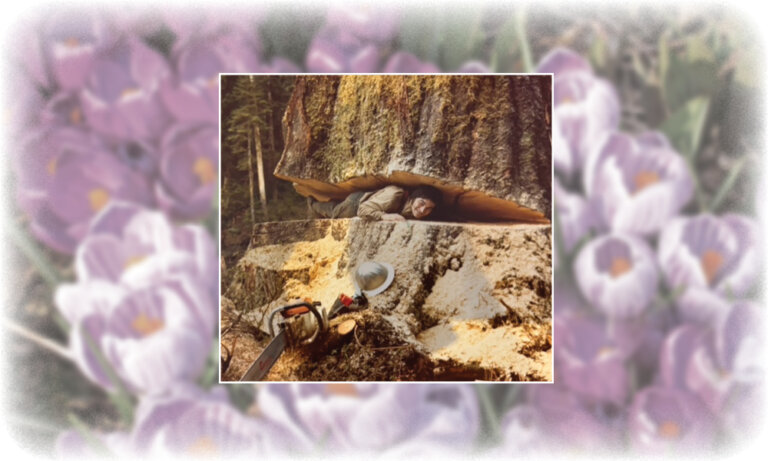
Eric was born (February 12, 1946) and raised on Salt Spring Island. Dad grew up on the family farm, learning to help with chores from a young age. Dad left home in his late teens, married Louise (his first wife) and began his career as a faller in the logging industry. Dad’s brother, Bert ‘broke’ him into the falling industry and dad loved working in the many logging camps on the West Coast, from Sooke to Rivers Inlet and was well respected for his expertise and skills. Dad had fond memories of working and living in Rivers Inlet, for Malloch and Moseley and on days off from logging, he enjoyed fishing on his boat, hiking and helping the community at large.

In the 1980s Eric and brother Bert bought the family homestead on Salt Spring Island and developed it into several lots and named the road after the family. Dad was proud of the work he and his brother put into creating the subdivision and he always held it as one of his most cherished accomplishments. Years later, Dad and his second wife, Candy built their own beautiful home in Cobble Hill, on five pastoral acres and he enjoyed time on the property when he was not working in camp.

Eric loved socializing and friends were plentiful throughout his life. Dad was always known for offering a helping hand to family and friends and was terrific at problem solving situations. Dad’s stamina was beyond compare and nothing was too hard to do, if it took strength and skill. One of his favourite sayings was, “Let’s get’er done,” and indeed, when Eric Kitchen was around, things got done!!! Some of dad’s other past times included sponsoring an adult soft ball team, helping a friend track a nuisance cougar in the snow, assist with any projects for family and friends and taking time to enjoy the company of others.

Dad loved the outdoors and his annual hunting trips on the Alaska Highway for moose. His retirement years were spent in Metchosin, where thanks to his cherished friends Danny, Carol and their family, he found friendship and peace.

“Like the trees, your roots run deep in our hearts”

Thank you to Dr. Nazar and Dr. Kinahan for their care and support during the last five years, while dad battled cancer and heart disease.

A Celebration of Life will be announced at a later date.

Viewpoint: On Thought, Morality, and Other Unruly Forces

0

By DAVID GORDON

People seem to treat thought as if it were a polite little house-guest — something that knocks before entering and wipes its feet on the mat. But I’ve lived long enough to know better. Thought is like weather. It rolls in uninvited, kicks over the furniture, and leaves you wondering why you ever trusted a clear sky.

And morality — well, that’s another thing people misunderstand. They treat it like a Sunday suit: something you put on when company’s coming and hide in the closet the rest of the week. But morality isn’t a garment. It’s infrastructure. It’s the bridge you hope the other fellow reinforced before you drive across. Without it, the whole town collapses into the river, and everyone stands around pretending they didn’t see it coming.

Now, I’ve heard it said that the world is getting crueller, meaner, more inconsiderate by the day. Maybe so. But I suspect the world’s always been that way; it’s just louder now. Cruelty has better amplification. Selfishness has a marketing department. And inconsideration — well, that’s been running for office since the dawn of time.

But here’s the thing: morality still works. Not because it’s noble, but because it’s useful. A moral act is like a well‑placed beam in a creaking barn. It keeps the whole structure from falling on your head. You don’t have to be a saint to appreciate that. You just have to prefer your skull uncreased.

As for thought — its substance, its weight — most folks never notice it until it’s already pushed them somewhere that they didn’t intend to go. They think they’re steering the ship, but half the time they’re just waving from the deck, while the current decides their destination. And sometimes, if they’re unlucky, someone on shore mistakes that waving for a friendly hello.

But if you pay attention — real attention — you can feel the pressure before the thought forms. A kind of inward wind. A shift in the air . . . a change in air pressure, a cold spot in an old house. That’s the raw material. That’s the clay everything else is shaped from. And if you learn to read it, you can tell when a storm’s coming, or when a clear patch might give you enough time to fix the roof, or go cut hay.

Now, I won’t pretend that any of this is easy. Thinking is hard work. Moral thinking is harder. And thinking morally in a world that rewards neither is about as easy as teaching a mule to play the violin. But it’s still worth doing. Because every time you choose the harder path, you reinforce the bridge. You strengthen the barn. You keep the river from taking another soul downstream.

So. Mind your thoughts, because they have mass. Mind your morals, because they have momentum. And mind the signs, because the universe posts warnings more often than we might suspect.

Most folks ignore them. But you — you’re the sort who reads the signs. And maybe even sketches a few of your own. So cut each other the slack you seek, relax and enjoy the ride. You paid for your ticket already, so relax.

The writer is a digital creator and longtime Salt Spring Island resident.

Community Health Networks – What is their mandate?

0

By the Salt Spring Health Advancement Network

When people hear the word “mandate,” they often think of government orders or legal authority. But in the context of community health networks, a mandate is something both more human and more powerful.

It is the shared responsibility — granted by the community itself — to bring people together, align efforts and act where no single organization can succeed alone. Community health networks do not exist by accident. They emerge because a community’s needs are too complex, too interconnected and too important to be left to isolated programs or agencies.

At their core, community health networks are built on a simple truth: health is shaped by far more than clinics and hospitals. Housing, food security, social connection, mental wellness, education, transportation, income and cultural belonging all influence whether people thrive. No one organization holds all the tools to address these factors. A network’s mandate grows out of this reality. It exists to coordinate, connect and strengthen the many groups already working to improve well-being, so their combined impact becomes greater than the sum of their parts.

A mandate born from community need

The first source of a community health network’s mandate is need. Communities everywhere, and Salt Spring is no exception, face rising mental health challenges, an aging population, youth struggling with belonging and purpose, gaps in access to care, and increasing pressure on volunteer and non-profit organizations. These are not problems with single causes or single solutions. They cross sectors, generations and social boundaries.

When multiple organizations repeatedly encounter the same issues from different angles, a clear message emerges: collaboration is not optional, it is essential. A community health network is created to hold that shared space. Its mandate is to look at the whole picture, identify common priorities and support coordinated action. In this sense, the network is not imposing a role on the community; it is responding to what the community is already asking for.

A mandate granted through trust

Unlike top-down institutions, community health networks gain legitimacy through participation. Their mandate is reinforced every time a non-profit joins a working group, a health provider shares data, a municipality partners on a project or residents attend a community forum and see their experiences reflected in collective plans.

This trust-based mandate matters. It means the network is not there to compete with existing services, but to serve them — by reducing duplication, encouraging learning and helping partners move in the same direction. Over time, the network becomes a steward of shared vision. It helps answer questions like: What kind of community do we want to be? Where are people falling through the cracks? How do we measure whether we are truly improving well-being?

A mandate to work at the systems level

Most organizations are designed to deliver specific programs: counselling, meals, housing support, youth activities or medical care. Community health networks have a different mandate. They operate at the systems level.

This means looking for patterns rather than isolated cases. It means identifying barriers that affect many groups — such as transportation gaps, service fragmentation, stigma or long wait times — and bringing the right partners together to address root causes. It also means using data, community stories and lived experience to guide long-term strategy.

Because no single agency “owns” these systemic issues, the mandate to work on them must belong to a collective body. A community health network becomes the table where those conversations can happen and where coordinated solutions can be built.

A mandate to amplify community voice

Another essential part of a community health network’s mandate is to ensure that planning is not done for the community, but with it. Networks are uniquely positioned to elevate voices that are often underrepresented — youth, seniors, caregivers, people facing mental health challenges and those experiencing social isolation or poverty.

By gathering input, supporting community-led initiatives and sharing stories across sectors, networks help decision-makers understand what statistics alone cannot show. This role gives moral weight to the network’s mandate. It becomes a bridge between lived experience and institutional action.

A mandate focused on the future

Finally, community health networks carry a forward-looking mandate. While individual organizations often operate under short-term funding cycles, networks are designed to think in years and decades. They track trends, support prevention and invest in conditions that help people stay well, not just respond when they are unwell.

This long view is critical. Strong relationships, early intervention and shared infrastructure do not develop overnight. A network’s mandate is to protect and nurture these foundations, even when immediate pressures compete for attention.

More than permission — a responsibility

In the end, a community health network’s mandate is more than permission to exist. It is a responsibility to convene, to listen, to align and to act in the collective interest. It reflects a community’s recognition that health is everyone’s business and that lasting change depends on working together.

When a community creates and sustains a health network, it is making a quiet but profound statement: that well-being is not the job of one organization but the shared work of an entire island, town or region.

The Salt Spring Health Advancement Network (SSHAN) is a Salt Spring-focused community health network of 35 active community partners with a vision of “a collaborative and connected community working for the well-being of all.” Some of its mottos are “Nothing about the community, without the community” and “Together we are better!”

SSHAN is currently engaged around an updated community health needs assessment, the Mental Wellness Initiative, the needs of insecurely housed and unhoused community members, seniors and community health and well-being generally. Its main charitable sponsor is the Lookout Foundation.

For more info about SSHAN and/or to be involved, connect to the SSHAN online pages at sshealthadvancemen.wixsite.com/sshan, on Facebook or via email at sshealthadvancementnetwork@gmail.com.

Editorial: Closing hall doors

0

Few topics are of universal interest in any community, but on Salt Spring, the future of a most central spot in Ganges village comes close.

The fate of the Ganges fire hall, also known as Fire Hall No. 1, will be entering the realm of official public discussion next week when the Salt Spring Local Community Commission (LCC) receives a report on the state of the 73-year-old building. It should be part of the agenda package for the LCC’s evening meeting on Thursday, Feb. 12, which members of the public are welcome to attend.

The LCC, through the Capital Regional District (CRD), will assume ownership of the site four months after the new fire hall is occupied, as per an agreement related to a $1-million CRD contribution to the Salt Spring Island Fire Protection District, which reduced the project’s borrowing costs by that amount.

We would be surprised if the report contained “good news” about the state of the building and the practicality of preserving it. Among reasons a new main fire hall has been needed for years have been well-founded worries over the existing building’s health and safety deficits. Its inability to withstand a serious earthquake, coupled with the likelihood of having to mitigate the presence of toxic materials like asbestos for any significant renovation, should concern those hoping to fully preserve the “heritage” structure itself.

We understand the building holds sentimental value as a fixture that’s been in the centre of town for so long, especially because of its clock tower, which is useful as well as visually iconic. (While in Ganges it’s easier to check the time with a quick skyward glance than searching for it on a cell-phone, for sure.) Eating hot dogs and sipping hot chocolate at the hall after Halloween fireworks are part of many islanders’ favourite memories, along with annual Fire Prevention Week open houses and other safety-oriented events and fundraisers held there.

But in considering what will happen next at the fire hall site, we hope sentimentality will find an appropriately temperate rank on the list of considerations, that a fulsome public input process will be developed, and that in the end a balance will be struck — between cherished memories and respect for local taxpayers.

Scorpions host North Island tourney

Gulf Islands Secondary School (GISS) senior girls Scorpions basketball team is hosting the AA-level North Island championship tournament from Feb. 3 to 5.

Ranked #1 in their pool after a strong regular season, GISS started off on the right foot Tuesday, Feb. 3 with a 63-39 win over a Queen Margaret’s School team.

The Scorpions next play on Wednesday, Feb. 4 at 4:30 p.m. Spectators are welcomed!

The schedule is as follows. See https://www.instagram.com/giss_athletics/ for updates as games are played.

Feb.3rd 

1- 1:00pm GISS vs  QMS 

2- 2:45pm Highlands vs Ladysmith 

3- 4:30pm  Brentwood vs  KSS   

4- 6:15pm  Brooks vs Shawnigan 

Feb.4th  

5- 1:00 pm Losers games 1 + 2    

6- 2:45 pm Losers games 3 + 4    

7- 4:30 pm Winners games 1 + 2   

8- 6:15 pm Winners games 3 + 4   

Feb. 5th   

9- 9:00 am Loser game 7 vs Winner game 6   

10- 10:45 am Loser game 8 vs Winner game 5   

11- 1:30 Loser of game 9 vs Loser of game 10 5th  and 6th    

12- 3:15 pm Winner game 9 vs Winner game 10 3rd/4th    

13- 5:00 pm Winner game 7 vs Winner game 8 1st/2nd

Drum-Making Workshop Brings Indigenous Teachings to Salt Spring

BY SALT SPRING ISLAND FARMLAND TRUST

On Sunday, Feb. 7, Beaver Point Hall will be filled with the sound of stories, tools and careful hands as Cowichan and Hawaiian knowledge keeper Hwiemtun (Fred Roland) leads a day-long drum-making workshop hosted by the Salt Spring Island Farmland Trust (SSIFT).

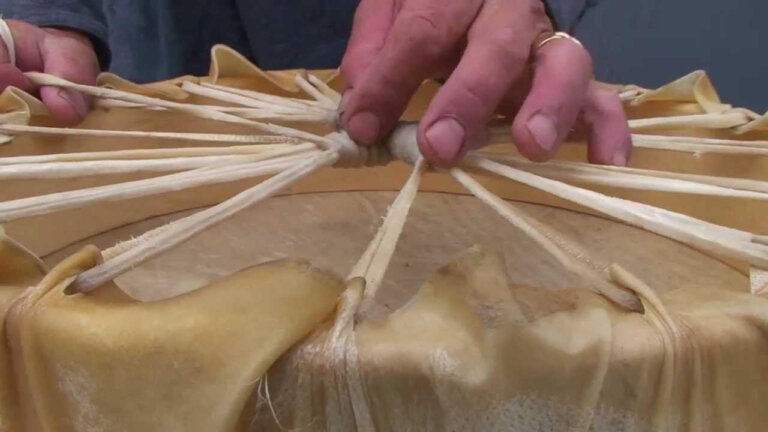
Rather than beginning with materials or technique, Hwiemtun begins with relationship. Participants will be guided through the creation of a traditional hand drum using cedar and elk hide, while also being invited to reflect on where those materials come from, what they ask of us, and how responsibility is woven into Indigenous foodways and cultural practices.

The workshop arrives at a moment when many on Salt Spring are grappling with urgent questions about land use, food security and sustainability. For SSIFT, the course offers a way to broaden those conversations beyond policy and practice, grounding them instead in values, memory and long-standing stewardship traditions.

“Hwiemtun teaches from a place of deep attentiveness,” said SSIFT director Andrea Palframan. “He asks people to slow down and really consider their relationship to land and food — not as resources, but as living systems we are accountable to.”

Drawing on teachings passed down through generations, Hwiemtun’s approach emphasizes listening: to the land, to materials and to the stories that connect people to place. Participants will learn not only how to assemble a drum but also why every part of an animal or tree matters, and how gratitude and restraint are central to sustainable food systems.

“For Indigenous communities, using the whole animal isn’t just practical — it’s ethical,” Palframan explained. “Those teachings align closely with values many people are rediscovering now, like minimizing waste and repairing our relationship with the natural world.”

The Farmland Trust sees the workshop as a natural extension of its work supporting agriculture, food education and land stewardship on the island. While SSIFT is often associated with farming and farmland protection, Palframan notes that cultural learning plays a vital role in shaping how communities care for land over the long term.

“If we want resilient food systems, we also need resilient ways of thinking,” she said. “Indigenous knowledge systems hold lessons that have allowed people to live well within ecological limits for thousands of years.”

Throughout the day, Hwiemtun will weave together hands-on instruction with storytelling and quiet observation. The setting — a fireside room overlooking the water — offers space for reflection as well as conversation among participants, who may include farmers, educators, land stewards, artists and others curious about Indigenous approaches to food and land.

Each participant will leave with a completed drum, but organizers emphasize that the experience is about much more than the finished object. The process itself — working carefully with natural materials, acknowledging their origins, and taking time to reflect — is central to the learning.

As Salt Spring Island faces increasing pressures from climate change, development and rising food costs, SSIFT hopes the workshop will encourage broader thinking about solutions.

“Technical fixes matter,” said Palframan, “but cultural shifts matter just as much. Learning how to be in respectful relationship with land and food is foundational work.”

Registration is open, with limited spaces available. Early registration is encouraged.

Course details and registration information can be found at ssifarmlandtrust.org.