When Transition Salt Spring (TSS) was formed 16 years ago as a climate-change response group, it identified an unhealthy trend it hoped to address as part of its work.
An initial TSS public statement and potluck invitation in August of 2010 cited “a significant reduction in real communal activity” as “an unintended consequence of the prosperity created by our current capitalist system . . . Activities such as TV watching, surfing the net, shopping and other forms of consumption invariably take us away from connecting with those in our own community and even within our own families. TSS intends to engage all citizens in building a strong and resilient community.”
As its April 2 annual general meeting (AGM) and 2025 annual report illustrated, TSS is doing admirably well at working towards that goal.
Just as community members would gather to build a farmer’s barn in the “old days,” now we gather to deal with wildfire threats by sharing biochar kilns or helping clear lands of fire fuel and chipping it, facilitated by TSS. Through TSS Repair Cafés we get together to fix broken appliances and revive well-loved but battered garments, and perhaps learn how to do the repairs ourselves the next time. Those and other TSS activities engage people of all ages; members of the organization’s “Coach Circle” that leads Repair Cafés and other waste-reducing activities range in age from 17 to 77.
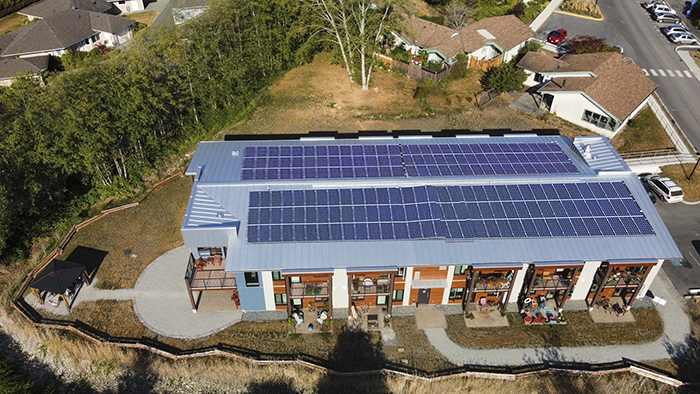
Diversity is an essential component when we’re talking about “resilience,” which is one reason TSS’ support of affordable housing initiatives makes practical sense. We need skilled and physically able people of younger ages to deal with the impacts of climate change. Those individuals and their families need secure housing in order to help themselves and all of us.
Both the 2025 TSS annual report (available on its transitionsaltspring.com website) and leadership presentations made at the AGM illustrate that while the numbers do matter — from how much waste is diverted from landfills to how many hectares of wetland have been restored — what’s more important is the relationships being built in order to prepare for and prevent the worst of an uncertain future, and to make the positive parts even better.