Home Blog Page 3

Society to unveil Japanese Canadian Memorial Story Project at Peace Park

This weekend marks the unveiling of a project that hopes to illuminate a largely invisible part of island history, as the community is invited to join in commemorating the contributions, resilience and displacement of the pre-war Japanese Canadian community on Salt Spring and the Southern Gulf Islands.

The Japanese Garden Society will host the unveiling of the new Japanese Canadian Memorial Story Project interpretive structure at Heiwa Garden on Sunday, May 31, encouraging reflection on the consequences of exclusion, racism and forced displacement.

“The purpose of this project is not only to remember the past,” according to the project team, “but also to create opportunities for reconciliation, learning, dialogue and community connection.”

The new interpretive structure installed in Heiwa Garden is the heart of the project, inspired by traditional Japanese-style joinery and woodwork. 

The structure houses four interpretive panels sharing stories of Japanese Canadian working life, family life and community-building on Salt Spring Island from the late 1800s onward.

The project also includes the installation of a new interpretive panel near the corner of Lower Ganges Road and Wildwood Crescent, recognizing the pre-war Japanese Canadian farming community that once thrived there, as well as revisions to the existing historical charcoal kiln panel in Mouat Park.

Organizers said the unveiling celebration will take place in two parts, the first being a space-limited invitation-only gathering from 1:15 to 2:15 p.m. at ArtSpring. 

The second part, a public community gathering open to everyone, will take place from 2:30 to 3:30 p.m. at Heiwa Garden in Peace Park.

The gathering will feature remarks from community members, representatives of pre-war Japanese Canadian families and local elected officials, along with a ribbon-cutting ceremony and musical performances.

The event will open with a land acknowledgement and remarks by J,SINTEN John Elliott, respected Elder and SENĆOŦEN Language Knowledge Holder of the Tsartlip, W̱SÁNEĆ Nation.

Members of five pre-war Salt Spring Island Japanese Canadian families will attend the gathering. 

Before the Second World War, according to the society, eleven Japanese Canadian families lived on Salt Spring Island; following wartime uprooting, dispossession and displacement under government policies that did not support cultural diversity, only one family — the Murakamis — returned to live on the island after the war.

The Japanese Canadian Legacies Society is supporting 29 heritage projects across British Columbia to recognize and preserve the history and legacies of Japanese Canadians in the province. For information visit saltspringjapanesegarden.com.

Nobody Asked Me But: Coexistence with the common garden hose

If you are a gardener, or contemplating becoming one, you should be forewarned about one of the most dangerous hazards that awaits you the moment you dare set foot in your little garden plot. This predator lies coiled and camouflaged in the foliage and is ready to spring out and strike when you least expect it.

You might guess incorrectly by assuming this threat is a poisonous snake such as a cobra or a rattler whose deadly venom would put you in the throes of agony before your lifeless body converted to a heap of compost and mulch. Then again, perhaps you may mistake this creature for a bone crunching python or boa constrictor lurking in the vegetation and ready to coil itself around your unsuspecting torso before squeezing you into a manageable nice light snack.

Your guess at the species of predator that is stalking you is actually not that far off. It may not be a cold-blooded soulless reptile but could easily appear as one in your overly fertile imagination. What you had projected as a murderous serpent is none other than the common garden hose.

Okay. Perhaps a little exaggeration is at play here. Everybody knows that garden hoses are inanimate tools invented by humankind to transport water from one place to another. If you believe that, you are dead wrong. In reality, they have minds of their own and their sole purpose on this earth is to frustrate the hell out of gardeners.

When you bring a new hose home from the hardware store, it is usually attractively packaged and held together in tight coils by plastic zip ties which can be easily snipped without much shedding of your blood. 

When you unwrap the packaging, you realize that the coils present a problem because you want a long flat line that maximizes the full length of the hose. The accepted method to get rid of the circular coils is to allow the hot sun to get at the hose and gradually force it to let go of its spiral shape and lie flat along the ground. Unfortunately, this will never happen because as soon as you expose the hose to the hot sun, the sun will mysteriously disappear for six weeks and be replaced by incessant rain (which will negate the reason you bought the hose in the first place).

Even if the sun does shine, most gardeners are too impatient to allow their hoses to flatten properly. There’s good reason why gardeners are referred to as “hosers.” It’s only a matter of time before the nefarious hose, bent on evil intent, transforms itself into a rubber leg-hold trap which catches the gardener in its clutches and brings him down. The more the gardener struggles, the more wrapped up and tangled he gets. This usually occurs when said gardener is in the process of pushing a wheelbarrow overloaded with a giant heap of manure and compost. Inevitably, the gardener will land at the very bottom while the wheelbarrow’s steaming load will act as a proper topping.

Moving hoses from one area of the garden to another can often make for a dangerous and complex manoeuvre. While you are dragging one end of the hose over to the tomato plant bed, you may not realize that most of the other end of the hose has decided to take a short cut through your bean patch, thusly wiping out weeks of dedicated care and labour. As a result, you may find that the water sprinkling down on each tomato seedling has a definite salty taste because it has fallen directly as tears from your eyes.

Then there’s the matter of connecting hoses together or pulling them apart. The slow, old-fashioned method involves screwing the male end of one hose into the female end of another. If you don’t know which is which, nobody has to know, but make sure you don’t cross-thread the ends while trying to screw them together. You will wind up stripping the thread so that the two ends will never be able to couple properly. Not only will you get soaked by the resulting spray, but you will probably ruin both hoses.

Another important detail when connecting hoses to just about anything is making sure you place a rubber washer between the hose and whatever other device you are attaching to it. 

It doesn’t matter whether it’s another hose, a water faucet, a timer, a sprinkler, a drip hose, a water valve, a wand, or an entire irrigation system, the result of not using this ridiculously cheap but absolutely essential gizmo will result in you getting more soaked than any part of your garden.

Hoses have this bad habit of getting tangled up with each other. The cheaper ones tend to kink and bend over one another. The kink eventually causes a split in the hose which causes a hundred foot geyser, like Old Faithful at Yellowstone National Park, to shoot up into the air. It will be only a matter of minutes before your well or water reservoir will have run dry.

Instead of screwing together the ends of hoses and other watering devices, another way to go is by using quick-click and release connectors such as the ones marketed by Gardena and Temu. The beauty of these connectors is that it makes changing from one watering tool to another just a simple click away. What could be better?

Well, what could be better is if these devices didn’t cost an arm and a leg for each connector (and you will probably need a couple of handfuls to attach to all your watering thingamabobs), or if they didn’t crack or break as readily, or if they didn’t leak as easily even if you remembered to use rubber washers.

Nobody asked me, but if you go down to the woods today you’re in for a big surprise. 

If, however, you amble down to your garden at any time, don’t be shocked if you find a predatory green garden hose lurking in the shrubbery. The hose is the hunter and you are the prey. If you are not exceedingly careful, it might be a case of the hoser getting hosed. Remember, I never promised you a hose garden.


Donation enables GISS minibus purchase

ARTICLE COURTESY GISS

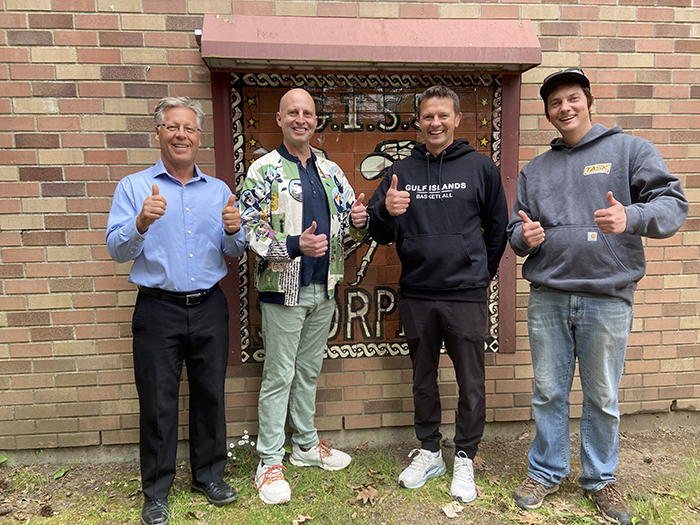
Students at Gulf Islands Secondary School (GISS) rely on more than just the classroom to learn and grow. From athletics and outdoor education to robotics and academic competitions, off-campus experiences play a critical role in shaping confident, capable young people. But the reliability of the vehicle has become an increasing challenge.

The school’s current minibus, now over 25 years old with more than 180,000 kilometres on it, no longer meets the school’s needs. Ongoing mechanical issues have made it unreliable and often unavailable, limiting access to student opportunities. Students and staff regularly travel long distances on highways and ferries, making dependable transportation essential to ensuring programs and trips can continue without disruption.

With budget limitations, replacing the aging bus has not been an option and so now the school community is turning to private support to help solve a growing transportation and accessibility challenge.

“A minibus is an integral part of not only our athletics program, but also many other school programs such as robotics, TASK, leadership activities, and class trips,” said Tom Langdon, athletic director for Gulf Islands Secondary School. “Having access to a dedicated bus significantly reduces transportation and ferry costs, allowing more students to participate in valuable extracurricular and educational opportunities. It also provides greater flexibility when organizing travel for competitions, tournaments and other educational purposes.

“Beyond the financial benefits, the bus creates an important sense of community among students. The time spent travelling together helps students bond as a team, club or class, building school spirit, friendships, leadership skills and a stronger sense of belonging. These shared experiences are often some of the most memorable and meaningful parts of a student’s school experience.”

A new multi-passenger vehicle will support a wide range of educational programs at GISS. Athletics teams rely on it to attend competitions across Vancouver Island and the Lower Mainland. Academic and STEAM programs, including robotics, depend on transportation to participate in events that extend beyond the island.

The Wilding Foundation has recognized the importance of student safety and access, and has contributed $75,000 toward the purchase of a new/new-to-us vehicle. While the foundation is known for supporting STEAM initiatives, it also understands that athletics and extracurricular activities help develop leadership, resilience and teamwork — qualities that shape future changemakers.

Studies show that roughly 68 per cent to over 70 per cent of C-suite executives and corporate leaders are former collegiate athletes. The correlation is even higher for women in leadership, with 94 per cent of women in C-suite positions reported as having played competitive sports.

With funding in place, the school board can now move forward in purchasing the new vehicle. Investing in this bus is not just about transportation. It’s about ensuring students can continue to explore, compete and learn beyond the classroom.

Air facilities getting upgrade

0

The Harbour Authority of Salt Spring Island (HASSI) announced Friday it is expanding air transportation facilities in Ganges Harbour through a major infrastructure project.

According to a press release issued May 15 by the Island Coastal Economic Trust (ICET), which is providing $200,000 towards the $1.2-million undertaking, the project will add two new seaplane docks and additional transient moorage to better accommodate growing demand from residents, visitors, commercial operators and neighbouring island communities. ICET says “upgraded facilities will support safer, more efficient and higher-capacity movement of people and goods while improving year-round access to Salt Spring Island.”

“These upgrades will help improve reliability, safety and capacity while positioning the harbour to meet the region’s evolving transportation needs,” said HASSI executive officer Russ Ellis in the release.

ICET said the expanded facility is expected to reduce transportation bottlenecks, strengthen emergency response capabilities and support tourism and economic activity throughout the region. The project is also expected to create one new direct part-time position and 11 seasonal jobs, while supporting the expansion of existing businesses and social enterprises. 

“In coastal communities, transportation infrastructure shapes everything. It determines which businesses can grow here, what services people can access and the quality of life islanders are able to build,” said ICET CEO Brodie Guy. “We’re grateful to have worked in partnership with the Harbour Authority of Salt Spring Island on this project that will unlock significant new business investment and activity in Ganges, while strengthening the day-to-day wellbeing of residents across the Gulf Islands who rely on this harbour.”

ICET is an economic development body created by the provincial government in 2006. Salt Spring and the other Southern Gulf Islands have been eligible for ICET funding since 2021. 

New enforcement policy aims to protect tenants, target ‘slumlords’

0

A broad standing resolution that had deferred nearly all enforcement against unlawful residential dwellings on Salt Spring has been rescinded, replaced with a refined, slightly narrower policy trustees say is custom-built to protect precariously housed islanders.

Both tenants and “well-meaning” landlords should have little to fear from the island’s new bylaw compliance and enforcement policy, according to Salt Spring trustee Laura Patrick, as the proposal adopted by the island’s Local Trust Committee (LTC) Thursday, May 14 is written to incorporate the intent behind that deferral and five additional now-rescinded standing resolutions into a single document. 

But Salt Spring landlords — some of whom, she noted, had been “doing some horrible stuff” under the LTC’s benign neglect — will find the new policy is designed to find an “out” for tenants who may endure poor conditions under fear they have nowhere else to go.

“We have slumlords, let’s be frank,” said Patrick. “As soon as there’s a whiff of a complaint, they threaten the person or throw them out.”

By design, the new policy essentially tasks bylaw enforcement staff with inventing an “alternative approach” for non-permitted dwellings, one that targets “mediating the compliance concerns and mitigating housing and living situations.”

“They won’t get the typical letter that we send to respondents when we’re opening a file,” said bylaw compliance and enforcement manager Warren Dingman. “We will develop a completely new process to deal with complaints about non-permitted dwellings, and I believe that that was the intention from the start when this motion was passed. There’s an alternative way to do this, and we can do that.”

That will likely include coordinating with local housing and social service groups when possible, and law enforcement when necessary.

“The person needs to be taken care of, helped to get out of the situation,” said Patrick. “Second thing then is to throw the book at that slumlord so they stop doing those things.”

That situation is distinct, she added, from well-intentioned landlords with infractions they might not be able to afford to fix.

“Maybe their septic system is failing, and they need help finding resources to fix it,” said Patrick. “We’ve got all kinds of extremes, and it’s really about bringing a compassionate approach to the issue — recognizing there are some pretty awful situations that some people are in.”

Local governments have generally wide discretion on whether, when and how to enforce against contraventions of their own bylaws — a discretion historically exercised unevenly in the Gulf Islands, usually due to community desires or simply because of limited resources. 

Salt Spring’s resolution halted most enforcement activities for existing dwellings “until there are safe, secure [and] appropriate housing options that are affordable for all demographics and household types in perpetuity,” with narrow exceptions chiefly related to health and the environment. Despite this, the Islands Trust’s on-the-ground policies on bylaw enforcement came under fire in 2023, with residents voicing concern over issues of transparency, fairness and heavy-handedness in how the land use authority worked to gain compliance with its bylaws.

That came to a head after the provincial Ombudsperson’s office issued a list of recommendations that fall, and by early 2025 trustees had launched a review process, producing a draft template later that year for each LTC to modify as needed.

For Salt Spring, that meant incorporating several standing resolutions into a single document, retaining that “in perpetuity” language and addressing controversial policies like when to conduct site inspections, when bylaw enforcement staff could close a file at their own discretion and whether to take property owners’ financial situation into account when looking at infractions. 

Local trustees had their first look at a draft policy in March, and Dingman returned this month with asked-for amendments, including specificity around types of non-permitted dwellings that won’t see enforcement. 

Patrick explained new-to-a-property trailers and recreational vehicles (RVs) will still be “protected,” but that will no longer extend to new construction.

“People building a house without a permit [is] very different from putting an RV in your front yard,” said Patrick. “Until we have housing, RVs are going to continue to proliferate, unfortunately.”

The updated policy will be available soon on the Islands Trust website.

Pool, park fees rising this fall

0

By the end of summer, most fees and charges for Salt Spring Island parks and recreation facilities will see a three to five per cent hike as local officials grapple with wages, operating costs and inflation outpacing notable rises in revenue and attendance.

Salt Spring’s Local Community Commission (LCC) approved the changes Thursday, May 14, part of a package that increases admission prices at the Rainbow Recreation Centre pool alongside bumps in the cost to rent pool facilities, fields, courts, classrooms, storage and the gym. The single-admission adult price at the Rainbow Recreation Centre pool will rise three per cent to $6.95, with youth 13 to 18 and students paying $5.20 and children five to 12 priced at $4.15. Under four “tots” will remain free.

“The goal of the process is to balance the tension between financial accountability, affordable community access to facilities and services, and market competitiveness and the realities of the marketplace,” said Salt Spring’s senior CRD manager Dan Ovington. “At a high level, we’ve seen revenues and participation in parks and recreation increase over the past year, [but] wages, operating costs and inflation have resulted in higher than expected costs.”

New this fall will be a shift in pricing structure for tennis and pickleball court bookings, which are moving from a $5 daily flat fee to hourly rates: $2.75 per hour for youth, $3.50 for adults and $4.70 per hour for commercial users. 

Ovington said that recognizing cost can be a barrier for access to both facilities and programs, PARC will continue to offer the Leisure Economic Access Pass program, which provides 52 free drop-ins and subsidies for those requiring financial assistance for memberships or registered programs. CRD recreation centres also offer free access to a support person for those needing additional assistance.

The new fees and fee structures take effect Sept. 1.

Editorial: Market forces

0

Salt Spring Islanders have a storied tradition of rolling up our collective sleeves to tackle problems left too long unsolved. 

Increasingly, as we’ve seen with the proliferation of employer-operated housing, those ad hoc solutions are created now by businesses. To solve parking scarcity during the high demand Saturday Market period, a new lot on Ganges Hill has been launched with a novel approach: framing a partnership between island businesses and local nonprofits, with support from the Chamber of Commerce. And always eager for fundraising opportunities, we have little doubt the response to a call for groups willing to staff the lot in exchange for half the $10-per-car fee was robust. Back-of-the-napkin math would easily put the take in the high hundreds, which is not bad for a day’s volunteering.

At the May 16 Saturday Market, early reviews were good. Holding some cars up the hill thinned out Ganges traffic noticeably, if not transformatively.

That the new lot on Fulford-Ganges Road might also relieve parking pressure at Country Grocer/Ganges Village Marketplace was not lost upon islanders, who tend to hold forth on summer traffic at both places with a Yogi Berra level of zen: “no one shops on weekends, it’s too crowded.” The beauty of the “market parking” sign was that it could be read to cover either, and property owner Leigh Large himself was spotted driving at least the inaugural shuttle run down the hill in the placarded six-seater golf cart. 

The abrupt long-weekend launch of the lot left no time to investigate, but while it seems unlikely the property is zoned to permit off-site parking, it seems even less likely our Local Trust Committee — at least those members who still show up to the meetings — would enforce against a collaboration featuring struggling charities and Salt Spring’s largest private employer. 

Our trustees have spoken as a single voice — lately, almost literally — in refusing to let perfect be the enemy of good. And we’ve certainly chided them before for selectively enforcing their own bylaws, rather than tackling the substantive work addressing the land use authority’s role in whatever problem needs fixing.

But however one feels about shortcuts, by definition they get somewhere faster. We hope both our vendors and island nonprofits absolutely rake in the cash this summer.

Viewpoint: Forestry barons still rule

The following is written by a Salt Spring Islander in response to news reports of the currently shut Crofton pulp mill having interested buyers.

By PETER HAASE

Forests become sawn lumber and the scraps usually processed into pulp and paper. If only!

The waste and environmental destruction in B.C. has been immeasurable from day one. The greedy lumber barons still rule.

The Crofton mill and adjacent log export facility are just two of many lumber-related industries in our province, and have existed just across the narrow waters between Salt Spring Island and Vancouver Island. The centuries-old forestry industry in our province is so enormous it boggles the mind. 

There are many pulp and paper mills and massive sawmills, scattered around our magnificent, lush province. The export of raw logs is a stupidly unbalanced policy, sending material that could be used in secondary wood industries like Sweden has done.

Flying for hours over B.C. presents an endless green carpet of forest, still mismanaged by our day-dreaming governments, federally and provincially. Ironically, we harvest all this lumber, sell it for pennies to China and the United States, while shutting things down here because the profit margin does not suit the wealthy owners? Both limiting exports and increased home manufacturing could work in concert, but that would take brains and imagination. Sorry, but greed and unemployment seem to be today’s agenda. 

I’ve worked in construction on a few mills, and know how quickly a shutdown can turn a thriving mill town into a ghost town. It’s all avoidable pain and loss, but China and the U.S. continue to gain as we lose. Maybe Canada should be more protectionist like other countries. Is it short sighted to suggest, charity begins at home?  Any thoughts?

British Columbia exports millions of cubic meters of raw logs annually, with figures varying based on market demand and coastal harvest rates. Recent reports indicate that raw log exports reached approximately 2.75 million cubic feet in 2024 to Asia and the U.S., while some estimates suggest higher, long-term averages or peak years exceeding 6 million cubic metres.

In Sweden, IKEA’s global success stems from its “democratic design” approach, offering stylish, functional home furnishings at remarkably low prices through a unique flat-pack, self-assembly model. By focusing on cost-control, massive economies of scale and immersive, experience-driven, maze-like retail stores, IKEA became the world’s largest furniture retailer, operating over 500 stores globally and generating over $45 billion in annual sales in fiscal year 2024.

Spring Rising Music Festival debuts May 30

It’s no secret that Salt Spring’s live music scene has exploded in recent years. 

The teeming talent pool keeps expanding, resulting in a healthy appetite for more music and places to hear it played.

That richness has led to the birth of the first Spring Rising Music Festival running Saturday, May 30 on the Farmers’ Institute grounds. We’re all familiar with hearing music from the stage and dancing during the annual Fall Fair. The festival will recreate that vibe and sense of community over an eight-hour period that day.

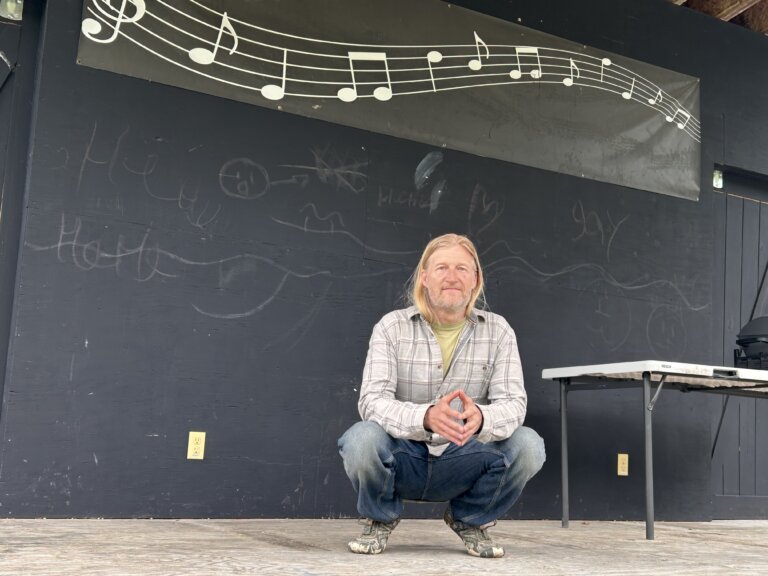
Jeff Wasiluk has been the institute’s office administrator since last October. When discussions about how to increase revenue for the organization arose, Wasiluk suggested holding a fundraising music festival. 

“I just threw it out there at a board meeting and it was received very, very warmly,” Wasiluk said last week as we took a tour of the grounds, which have undergone lots of upgrades and changes in the past two years — from the in-progress pollinator garden to the tractor shed to upgraded septic and much more — and put some pressure on the budget as a result. 

Fall Fair committee chair Gail Temmel suggested Wasiluk connect with musician Susanna Braund, who organizes the fair’s two days of music on the grounds stage, and Braund got to work on creating the resulting 10-act roster. It starts off with Jim Raddysh’s always-entertaining kids’ show at noon, with a variety of musical styles unfolding in 30- to 50-minute sets throughout the day and finishing off with the rockin’ Gasoline Alley band. (See full schedule in sidebar.) All performers are donating their time to the cause.

When Wasiluk returned to the board with news of how things were moving ahead, their support kept growing.

“They all started jumping in to help organize and volunteer for certain aspects of the day,” he said.

Food-wise there will be hot dogs, hamburgers, french fries, a popcorn machine, sliced watermelon and more, plus beverages. Thrifty Foods and Country Grocer have supported the fundraiser with free gift cards to help defray food costs. 

Festival tickets are $30 at the gate and only $22 in advance. Wasiluk encourages people to go for the advance ticket deal since having an idea about attendee numbers will help with food prep planning. Kids aged 12 and under are admitted free.

“I’m really excited at the prospect of this springtime all-day music festival,” said Braund. “It feels like the launch of the summer music season on Salt Spring, which is always an abundance of riches.” 

She said the Spring Rising lineup presents a wide range of musical styles and introduces a couple of new bands to an island-wide audience. 

“We are immensely grateful to the musicians for volunteering their time and talent, and to all the Farmers’ Institute volunteers. If the event is well supported, it could easily become an annual event.” 

This inaugural festival will be a no-alcohol affair, but that may be revisited for future iterations. 

Wasiluk notes that with Salt Spring Arts not organizing the Summer Outdoor Concert Series in Centennial Park this year, the Spring Rising festival will help fill a gap for outdoor music lovers. 

“It feels good when there’s something like this proposed, and then quickly people start coming together and wanting to make it happen. It’s certainly very Salt Spring, I think, for our community to come together and volunteer in various ways to help make life better in some way — more celebratory — and to help weave community.”

It’s also a manifestation of the Farmers’ Institute board wanting to see the grounds used even more than they have been in the past, which would not only bring in revenue but also facilitate community building. 

Wasiluk credits past and present board members and volunteers for all the work they’ve done to help the Farmers’ Institute be such a pivotal part of island life. 

“The timing is perfect to continue to evolve, just like it is everywhere on the island and everywhere in the world, one way or the other. Change is coming, so it’s really up to us to decide what some of that change looks like.” 

More volunteers to help with the festival would be welcomed. Email Wasiluk at office@ssifi.org for more information. 

MUSIC SCHEDULE

12:15 p.m. – Jim Raddysh Kids’ Show 

12:50 p.m. – Simon Trevelyan

1:25 p.m. – Kai Barrette 

2:10 p.m. – Zhinga 

2:55 p.m.- Caroline Dick 

3:35 p.m. – Gemsey 

4:25 p.m. – The Usual Suspects 

5:15 p.m. – Dave Des 

6 p.m. – Two Point Oh 

7 p.m. – Gasoline Alley

Q’ushin’tul’ walk ends in potluck 

By Joe Akerman and Asiyah Raesha

Q’ushin’tul’ means “walking with one another” in Hul’q’umi’num, a name describing our annual re-tracing of ancestral pathways, as a way to strengthen Quw’utsun and Coast Salish connection to culture, lands, waters, people and all of our living relations.

While each year takes a different shape, our walk and gatherings are grounded in the fundamental themes of unity, belonging, family and peace.

Q’ushin’tul’ is an ancestral vision received by Quw’utsun Elder Qwiyahwultu-hw (Robert George) and his family, who often lead multi-generational, land-based, cross-cultural work. This marks the seventh year of this ancestors walk. Quw’utsun and Coast Salish food, stories, songs and ceremony are shared during the Q’ushin’tul’ gathering. 

This year’s Q’ushin’tul’ walk is once again at full capacity, and will take place from May 21 to May 24. The walk will begin at the Lhumlhumuluts’ village of Xwaaqw’um (Burgoyne Bay) and we will spend the first day walking together up Hwmet’utusum (Mount Maxwell). The second day we will continue walking with one another on our way to Shiya’hwt (Ganges) where we will camp for the final two nights. On the third day we will journey around town to assisted-living facilities to share songs and prayers. And on our last day we will come together with the wider community at the Farmers’ Institute for a potluck brunch, cultural sharing and ideally integrating our shared work within the broader community. 

You are invited to join us at the Farmers’ Institute, rain or shine, on Sunday, May 24. Please bring a potluck dish or item to share, cutlery and plates, and camp chair or blanket. 

Schedule: 10:15 a.m. shuttle bus pickup (from Centennial Park); 10:30 a.m. doors open; 11 a.m. opening talk; 11:30 a.m. potluck brunch; 12 to 1:30 p.m. sharing by Elders, knowledge keepers and Q’ushin’tul’ walkers about protocols and unifying relationships with all of our collective relations here on Salt Spring and beyond. 

All individuals, families, cultures and communities living on Coast Salish territory are invited to join us at our Sunday potluck to listen, learn and witness! Learn more at qushintul.ca.