Home Blog Page 4

Bean Supper tradition returns to hall Sunday

BY WENDY ROSIER 

For Beaver Point Community Hall Association

This Sunday, May 24 sees the return of our bi-annual traditional Bean Supper to Beaver Point Hall.

A little history: the current hall was rebuilt in 1937 after having had a couple of different locations. In 1936, one hall was burned down and the present hall was built by the community.

Thanks to Lotus Ruckle of Ruckle Farm, an original bean supper was organized as a fundraiser to aid in the construction. In this time, the beans were all grown at Ruckle Farm, with salads and pies provided by the community.

Fast forward to 2026, when Beaver Point Hall is now run by a small, very dedicated volunteer board. We all work tirelessly to maintain this beautiful hall for all to enjoy through the many events that are hosted there. Our efforts are endless in the maintenance of the historic hall. Replacing the septic field, well maintenance, new floors, kitchen upgrades, dangerous tree removal, driveway and entrance improvements are just some things on the list that we’ve completed in the last couple of years, and the list never gets smaller, especially in an almost 100-year-old building.

This month we are hosting a core fundraiser in the form of a “gourmet/traditional” bean supper offering organic beans, coleslaw, locally produced tofu (Soya Nova) and pulled pork (South End Sausage) and breads, along with community-made desserts, house-made beverages and many smiles.

The hall relies heavily on fundraisers such as this both to aid in maintenance and to bring the community together to share food and enjoy the hall. We do hope to see you there! 

The May 24 event takes place  from 4 to 7:30 pm. Tickets at the door. 

CLARKE, Cindy

1956 – 2026

Cindy Lou Clarke (nee Senkpiel) passed away peacefully at Lady Minto Hospital on May 2, 2026, holding the hand of her loving husband of 49 years, Bob. She was diagnosed with a devasting and aggressive Leukemia (AMML) which overwhelmed her in a very short time. She faced this disease with courage, strength and dignity. In the very few days she had, her energy was focused on extending love and affection to her family and friends. Her children and grandchildren were her treasures on earth.

Cindy was born on Christmas Day 1956, in Prince George B.C., to Samuel and Phyllis Senkpiel. Her childhood was difficult, but she channeled those difficulties into developing a strong and resilient character reinforced by Christian values. That character was reflected in being a thoughtful, caring wife to Bob and a dedicated and loving mother to her two children, Jennifer and Ryan. She loved being a mom and poured her energy into homeschooling her children and instilling in them a lifelong love of learning. When her kids left home to pursue their lives, she became a teaching assistant working with children with learning difficulties.

She loved reading and playing games with her family, but she was an outdoors girl too and loved camping and nature. Once she had the time, she became an accomplished quilter, producing beautiful quilts for her family. After living in several communities and areas in B.C., including Prince George, Fort St John, Revelstoke and Sorrento, she chose Salt Spring Island as her retirement haven. She loved her cottage that looked out over the sea. It was a place that she worked hard at developing and building over the five years that she lived here.

Cindy was predeceased by her parents and her brothers James and Aron. She is survived by husband Bob, children Jennifer (Jeremy) Isaak with grandchildren Madeleine, Sam and Gabe of Salt Spring Island, and son Ryan (Leanne) with grandchildren Grace and Michael in Ontario. A brother Rob (Heather) of Cobble Hill B.C., a sister Patrice (Victor) Budac of Fort St John and a sister-in-law, Elaine Senkpiel of Salt Spring Island. She requested no formal funeral or marker preferring to be simply remembered in the hearts and minds of the people she loved.

Her family would like to thank her Doctors, David Goranson and Holly Slakov for their deep concern and care during her illness, as well as the tremendously supportive and caring medical staff at our “gem” of a local hospital, Lady Minto.

BIRD, Dolores (née Blatter)


Dec. 5, 1936 – May 6, 2026

With great love and sadness, the family of Dolores Bird announces her passing on May 6, 2026, at the age of 89.

Born in New Westminster, BC, Dolores was the youngest of four children of Jean (McRae) and Walter Blatter. She married Jim Bird, her devoted husband of 59 years, and together they raised their family in Squamish and later Salt Spring Island.

Dolores worked in several roles, including as a telephone operator and at the Post Office, but she was especially proud of her years cooking at the Squamish Valley Golf Club with her close friend Lorraine Hurren. Together they created the famous Bunwhich, and people came from all over for Dolores’s homemade butter tarts. Few know that Jim helped clear the land for the Club’s greenway by blasting stumps and rocks years earlier.

She is survived by her daughters Debbie (Peter) and Karen (Dwight); her sister Shirley Hill; her grandchildren Scott, Dean, Rob, Tawnee, Danica, Tyler, and Shyla; and her great-grandchildren Cassia, Keaton, Kalem, Carter, Hailey, Max, Fletcher, Scarlett, Henry, and Orwell.

She is predeceased by her husband Jim, her parents, her siblings, and her son Scott Bacon.

Dolores will be remembered for her generosity, humour, and the warmth she brought to every gathering. A service will be held at a later date. As an expression of sympathy, donations may be made to the BC Cancer Foundation, www.bccancerfoundation.com. You are invited to leave a personal message of condolence by visiting the family’s online register at www.thompsonfs.ca.

Campfire ban lifted May 15

0

A comprehensive burn ban that went into effect across all of B.C.’s southern coast May 7 will go on record as both the earliest in history, according to officials, and likely the shortest.

Salt Spring Island Fire Rescue (SSIFR) Fire Chief Jamie Holmes confirmed the district would again follow the broader regional guidance on burning that came through the BC Wildfire Service (BCWS), which late Tuesday, May 12 announced it would be lifting its restrictions on recreational campfires starting at noon Friday, May 15.

“We try and stay aligned with the province to avoid confusion,” said Holmes.

As of BCWS’s last update May 8, so far more than 5,100 acres have burned province-wide since April 1, with 41 fires burning 368 acres inside the Coastal Fire Centre region.

Other burning activities remain prohibited, including fireworks, burn barrels or burn cages of any size or description — and anyone who lights, fuels or uses an open fire when a fire prohibition is in place or fails to comply with an open fire prohibition may be issued a ticket for $1,150 or, if convicted in court, be fined up to $100,000 and/or sentenced to one year in jail. 

If the contravention causes or contributes to a wildfire, the person responsible may be subject to a penalty of up to $100,000 and ordered to pay all firefighting and associated costs, according to the Coastal Fire Centre.     

“When a burn ban is in effect, people are mostly conscientious,” said SSIFR Deputy Chief Dale Lundy. “We’ve had a few minor incidents, and we try to give people the benefit of the doubt. But it’s just so dry right now.”

Lundy said complaints about prohibited burning ideally should come to the department’s non-emergency line 250-537-2531 rather than 911, although he added they’ll get the message passed along from emergency dispatchers.

“But you know what, if anyone sees smoke, let us know either way,” said Lundy, “and we’ll check it out.”

For the latest information on current wildfire activity, burning restrictions, road closures and air quality advisories, visit bcwildfire.ca and saltspringfire.com.

Dancers excel at spring competitions

Salt Spring Island dancers are celebrating an outstanding competition season after strong results at two major Vancouver Island dance competitions this spring.

The dancers, who train together under instructor Jen Soo — owner of Studio North Dance Academy and Stage West School of Performing Arts — proudly represented Salt Spring Island among studios from across Vancouver Island and the mainland. Dancers featured in the group performances include Athena Dragland, Gia Van Riel, Isla Marcu-Alaire, Isla Ashall, Ivy Hennessey, Eva Ilinykh and Harlow Kazakoff.

Competing at VersaStyle Dance Competition at the Tidemark Theatre in Campbell River in mid-April and the April 28 to May 3 Euphoria Dance Competition at the Port Theatre in Nanaimo, the group earned numerous overall placements, special awards and adjudicator recognition.

Dragland achieved multiple top honours for her ballet solo Blue Bird, including First Overall Soloist placements, Top Score Grand Overall, an Emerald Standing award and an Adjudicator’s Choice Award. Her solo was also invited to participate in the Emerald Cup as a special guest performance.

Van Riel received overall solo placements for her ballet solo By Night at both competitions and also earned an Adjudicator’s Choice Award for outstanding performance.

The lyrical group Not About Angels, featuring the full Salt Spring Island team, earned top overall group placements at both events, including First Place Top Scoring Group at Euphoria with an Emerald Standing award. The piece was also invited to perform in the Emerald Cup as a special guest performance.

The jazz group Boogie Shoes also earned a top overall group placement at VersaStyle.

“The dancers worked hard this season and had a really strong competition run,” said Soo. “It was great to see them perform with confidence and represent Salt Spring Island so well.”

The dancers will next perform at the Community Dance Showcase at ArtSpring on June 5, where audiences will have the opportunity to see several of the award-winning routines performed live.

EVs with ‘cosmetic’ damage cleared to board

0

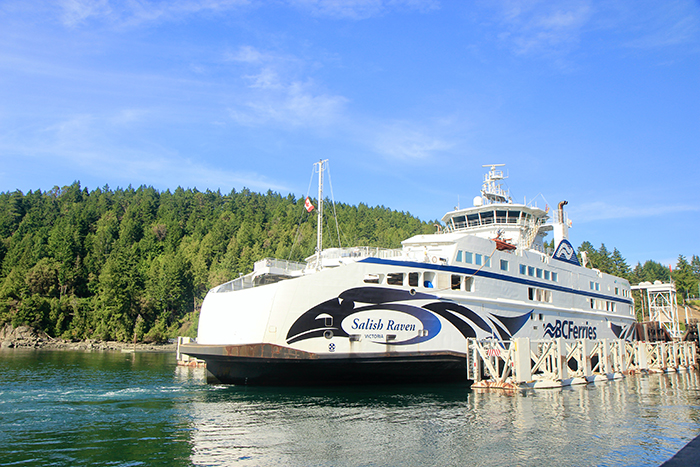
After an abrupt BC Ferries ban last summer — that for almost a year left about 1,000 vehicle owners on Salt Spring wondering how they’d get their electric and hybrid-electric cars or trucks off-island if they needed repair — the company has changed course.

BC Ferries announced Tuesday, May 5 that starting May 19 it would again welcome “immobile undamaged or cosmetically damaged electric vehicles” (EVs) to be towed aboard its fleet on regular routes, although the company said it would maintain its restrictions on more damaged EVs “where battery integrity cannot be confirmed.”

The policy represents another reinterpretation of federal Transportation of Dangerous Goods regulations in place since 2017, which BC Ferries cited last June in suddenly prohibiting all vehicles that used high-voltage batteries from boarding under anything but their own power — potentially stranding one in seven vehicles on Salt Spring Island alone, had they needed to be towed elsewhere for service.

“We understand the importance of this policy for ferry-dependent residents and EV owners,” said Darren Johnston, vice president of marine operations at BC Ferries. “Our revised policy recognizes the challenges they face while at the same time ensures that we comply with laws and regulations and continue to keep our focus on the safety of all our passengers and crew while travelling with BC Ferries.”

The corporation said in a press release the decision to again shift policy came after engagement with Transport Canada officials and “discussions with industry experts,” although what prompted the original policy change remains unclear. BC Ferries vessels must comply with Transport Canada’s safety guidance, and a Ship Safety Bulletin in 2024 noted EVs are “not more prone to fires than vehicles with an internal combustion engine,” although it recommended crews train specifically for fighting EV fires — which, the bulletin noted, can burn hotter and are more likely to re-ignite once extinguished.

BC Ferries posted updated materials on its website, including reference images illustrating cosmetic versus more serious damage and guidance for “improving the likelihood of successfully transporting immobile vehicles” — noting that each vessel’s captain retains “final discretion” to refuse transport.

“Where a damaged EV still contains its battery, ferry operators are responsible for determining whether its transport would pose a safety risk to passengers and crew,” according to the press release. “BC Ferries does not have the mandate or technical authority to inspect, remove or independently certify compromised EV batteries [and] BC Ferries crews are not trained to diagnose technical and complex issues with EVs.”

BC Ferries said there is currently no standardized inspection framework that ferry operators can rely upon to verify battery integrity for marine transport, and barring establishment of a “consistent, industry-recognized framework,” current restrictions will remain in place.

Local “institutional” EV users, such as Salt Spring’s Capital Regional District (CRD) and the Gulf Islands School District (SD64), will feel the same relief as those owning passenger vehicles; the CRD currently has several battery-electric and hybrid-electric vehicles in its fleet — along with an electric mower — and SD64’s five all-electric school buses, which represent nearly half its fleet across multiple islands, are largely under service contracts in Victoria and Vancouver for their high-voltage components. 

Salt Spring EV enthusiast Jim Standen said he knew of fewer than five vehicles affected by the ban, none of which had been immobilized as the result of an accident; one was ultimately barged by the dealer back to Victoria for service, he added, and the rest had been waiting for the policy review — and are now eligible for a tow.

“There may be others I am unaware of, but I tend to be in the EV news rumour grapevine, so I think that is pretty close,” said Standen, who co-founded Salt Spring’s Electric Vehicle Group in 2014. “For sure, some potential EV purchases were shied away from because of the ban, [but] the new rules make good sense, and still prioritize passenger safety.”

Sufficiently damaged EVs or hybrids will still need to have their batteries removed before they can be transported by BC Ferries, according to the company, adding those batteries must be transported separately as a “dangerous good” in accordance with Transport Canada regulations.

The EV and/or the high-voltage battery is considered damaged or defective if:

• The vehicle has anything more than minor cosmetic damage

• There are signs that the vehicle has been submerged in water beyond the axle

• Leaking coolant or unknown fluids from the battery area

• Smoke, vapours or heat coming from the battery

• Exposed or frayed high voltage wiring

• White powder residue near battery components

• Any signs of fire damage or unusual odours

• The battery casing is cracked, punctured, or visibly damaged.

For details — and visual examples of BC Ferries’ standards of acceptable vehicle conditions — visit bcferries.com/travel-boarding/dangerous-goods/immobile-EVs.


Editorial: Smoke and mirrors

0

No one else will say it, so we will: the BC Ferries ban on immobile EVs made no sense in the first place. 

If we believe that electric vehicles burst into flames at a greater rate than cars filled with gasoline (it’s statistically the other way around, for various reasons) or that ferry crews aren’t capable of effectively fighting a hot, persistent lithium battery fire (the CEO of BC Ferries sat at Salt Spring Island Multi Space and told us the precise opposite), we have to ask: why would they let EVs aboard at all?

Short memories aside, all of humanity had a crash-course in the precautionary principle earlier this decade, and we’ve seen on Salt Spring Island more than once how even small e-bike batteries going wrong can threaten entire homes. With an EV’s battery pack being an order of magnitude larger, knowing how much the fire danger also increases would be helpful to guide policy in a region with more electric vehicles transiting every day.

Instead — and still absent any evidence an EV on a tow truck is more likely to suddenly catch fire than one that can limp itself aboard — islanders and ferry crews are going to take turns critiquing vehicle damage for clues the battery might be compromised.

If your electric vehicle is unable to move under its own power, according to BC Ferries’ website, “you will need to check” whether any damage is purely cosmetic. The policy helpfully calls out smoke, heat and “unknown fluids” leaks (as if any vehicle in such a state might have ever been permitted aboard) along with exposed wiring and signs of fire damage.

Then, at the terminal, each ferry’s crew will make a final determination on whether you’ll be allowed aboard. There’s no specific metric, but the sample pictures tell the story: flat tires, paint scratches, cracked windows and broken mirrors are considered cosmetic. For everything else, it’s a battery removal and a trip on the Dangerous Goods sailing.

That seems like a “good enough” idea for now. Charitably, the new policy seems to have taken pre-kerfuffle practices and codified a little common sense. But for a company that crunches numbers as exhaustively as BC Ferries, we wish this safety move was more transparently driven by data.

Viewpoint: CRD partnerships valued

By GARY HOLMAN

SSI CRD DIRECTOR

I’m writing to clarify recent Driftwood articles regarding recycling at School District 64 (SD64), the Burgoyne composting facility, and the CRD Regional Trail.

The CRD strongly incentivizes residential recycling. Recycling BC, the non-profit corporation responsible for residential recycling throughout the province, provides some funding for rural depots, but CRD funding comprises the lion’s share. My priority has been to ensure continuation of this funding, and the CRD Board has recently approved a five-year contract for the Rainbow Road depot with funding of over $400,000 annually, as they have done for years. 

Garbage disposal for all sectors is served by private haulers on a user-pay basis. Neither Recycling BC nor the CRD have any mandate from the province to fund recycling for commercial or taxpayer-supported institutional sectors. However, CRD does enforce bans on recyclables and other materials at the Hartland landfill, ranging from food waste to construction lumber, and also encourages recycling of these materials with its tipping fee structure.  

The CRD is addressing waste management at the regional scale in other ways, including by investing millions of dollars in the recapture of methane generated within the landfill, and selling renewable gas to Fortis BC. This is resulting in one of the single largest reductions in regional greenhouse gas emissions. In addition to material bans, the CRD is also investigating alternatives such as gasification in order to extend the life of the Hartland landfill and avoid the huge cost we would all bear of establishing a new landfill in the region. 

The CRD Board does recognize the gaps in our waste management system. In September 2025, CRD staff contacted all school districts in the region, including SD64, to invite discussion of ways to facilitate recycling. Staff will soon be bringing a report to the Environmental Services Committee, to present some of these options, and I look forward to future discussions with SD64. 

With respect to food and other organic waste, which is rightly banned from the Hartland landfill, the CRD has provided several hundred thousand dollars in funding to establish and take ownership of a commercial-scale composting facility at the Burgoyne Valley Community Farm, in collaboration with the Farmland Trust (land owner) and the Abattoir Society (compost operator). At its May 13 meeting, the CRD Board will approve an exemption, subject to a 30-day public consultation period, to its composting bylaw that is redundant to provincial regulations. This will enable the composter to receive a broader range of feedstock from offsite sources, including the school district. The Trust is also considering a Farmland Trust rezoning application, allowing for offsite sales, that will enhance viability and broader community benefits. 

These issues demonstrate that while I’ve raised concerns regarding equitable treatment of electoral areas, there are also important CRD services and partnerships from which Salt Spring benefits. The new regional transportation service is not one of those examples. But the good news is that for the first time, several million dollars in design and construction funding for the Salt Spring segment of the CRD Regional Trail is still retained in the CRD Parks capital plan. While trail design won’t be accelerated, CRD Parks will oversee design work in 2027 with no delays as a regional transportation plan is developed.

Library hosts adventurous Sueño Bay show 

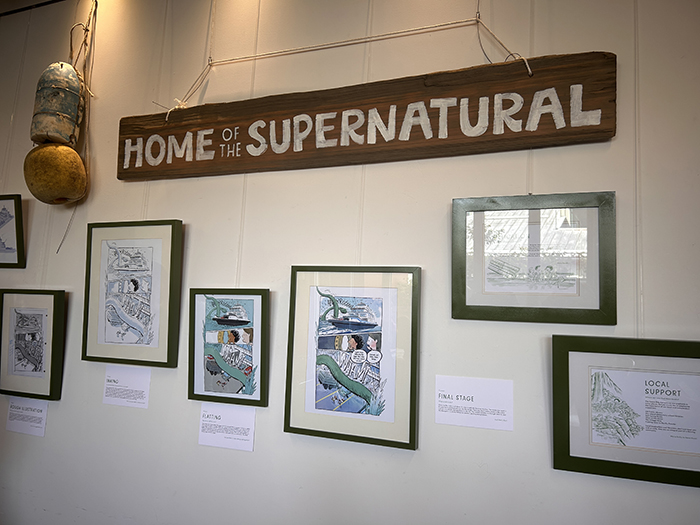
If you’ve ever wondered how a graphic novel is made, the answer is laid out in a fun and informative exhibition in the Salt Spring Public Library program room this month. 

Spend a Day in Sueño Bay opened Saturday, May 9, with friends and fans of Mike and Nancy Deas’ book series about the adventures of four unique island kids dropping by to check it out. Mike is the illustrator and Nancy the writer of six published books, with two more on the way. 

Mike grew up on Salt Spring, and Nancy on Mayne, and are now raising their family on Salt Spring.

The Sueño Bay Adventure Series follows friends Ollie, Kay, Jenna and Sleeves in their action-packed lives on a fictional island dubbed “Home of the Supernatural” for a reason: it’s famous for legendary “moon creatures” and mysterious crystals.

Nancy said Saturday that their original idea was to do four books, with each character being the lead in one of them. As the four kids have such diverse natures and personalities, the hope is that every reader will find one they can relate to. But as the books proved so popular, their publisher, Orca Book Publishers of Victoria, encouraged them to create more. 

The Sueño Bay Adventure Series books have been commended and nominated for numerous awards, and Candle Point, the fourth book, won first prize in the Sunshine Coast Writers and Editors Society awards for best children’s and youth book. The most recently published book — Howler Reef, the sixth — is a finalist for the Best Kids’ Book title in this year’s national Doug Wright Awards, which honours the best work in the comic genre. Mike is also a finalist in that competition as illustrator for Paisley & Peck: Jurassic Farm by J. Torres. Winners will be announced June 6. 

One wall of the library exhibition walks viewers through the book creation process with a description and illustration of each step, as well as a question for them to consider as if they were creating their own book.  

The eight books are summarized on another wall, and brief biographies and acknowledgements are in the far corner. 

The exhibit is as fun and creative as the books and their authors, and continues through May 30 during the library’s regular open hours, except when the program room is in use.

Release concert set for The Observer Effect

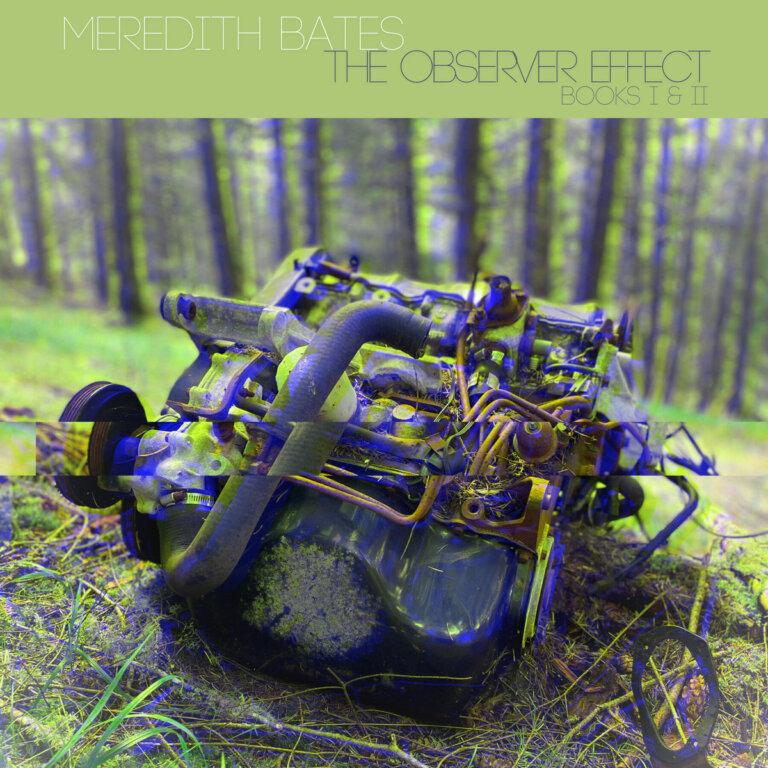
Award-winning musician Meredith Bates is promising an unforgettable night at All Saints After Dark on Thursday, May 21 when she unveils her new album The Observer Effect, along with special guests. 

Bates is an acclaimed Canadian violinist, violist and improvisor, and past member of Juno and Western Canadian Music Award-winning Pugs and Crows now living and making music on Salt Spring Island. 

Bates’ 2023 release Tesseract earned a Juno award nomination for Best Instrumental Music Album and received accolades such as Bandcamp’s Best Experimental Music. Bates says the new album builds on that foundation, unfolding over two expansive sections (or “books”) that total approximately 140 minutes of captivating music. 

The Observer Effect was released on March 13 on Phonometrograph and is available for streaming everywhere and purchase at meredithbates.bandcamp.com. 

“The Observer Effect invites listeners into an immersive experience, examining the interplay between observation and reality — a principle drawn from quantum mechanics and philosophy,” explains a press release. “Bates describes the album as an exploration of witnessing and being witnessed, an examination of emotional and political exchanges that shape our perceptions. Her compositions deftly probe themes of perception, illusion and metamorphosis, revealing the intricate dynamics that influence sound and identity.” 

This evening will also feature special guests Matt Robertson and Chris Gestrin, who will perform solo synth sets, elevating the concert with their distinct electronic artistry. 

Bates also thanked Of Sound Minds for event support, and WiL Shulba “for creating the magically immersive octophonic sound system.”

Since graduating with a film scoring degree from the prestigious Berklee College of Music in 1995, Vancouver native Gestrin has become an integral part of the Canadian music scene. As a versatile pianist and multi-keyboardist, composer, engineer and producer, he has worked on over 500 albums covering a wide range of musical styles. From experimental electronic improvisations to greasy soul organ music, introspective piano jazz to top-of-the-charts pop, rock and hip-hop, Bates said Gestrin is in high demand for his eclectic talents and ability to bring a high level of musical inspiration to any situation. 

Robertson is a three-times Grammy-nominated composer, producer and musical director. He’s worked with artists like FKA Twigs and Björk, and has released 11 solo albums blending ambient, techno and electronic styles. Bates said he combines synth-craft, classical composition and cinematic production. 

The May 21 event begins at All Saints by-the-Sea church at 7:30 p.m., with doors open at 7 p.m.

Tickets are available through Eventbrite

Bates’ work was also part of the recent innovative Digital Ecologies Spring Art Show at Mahon Hall.